.png)
.png)
.png)






10 Structural Red Flags to Check Before Buying a Warehouse for Indoor Golf
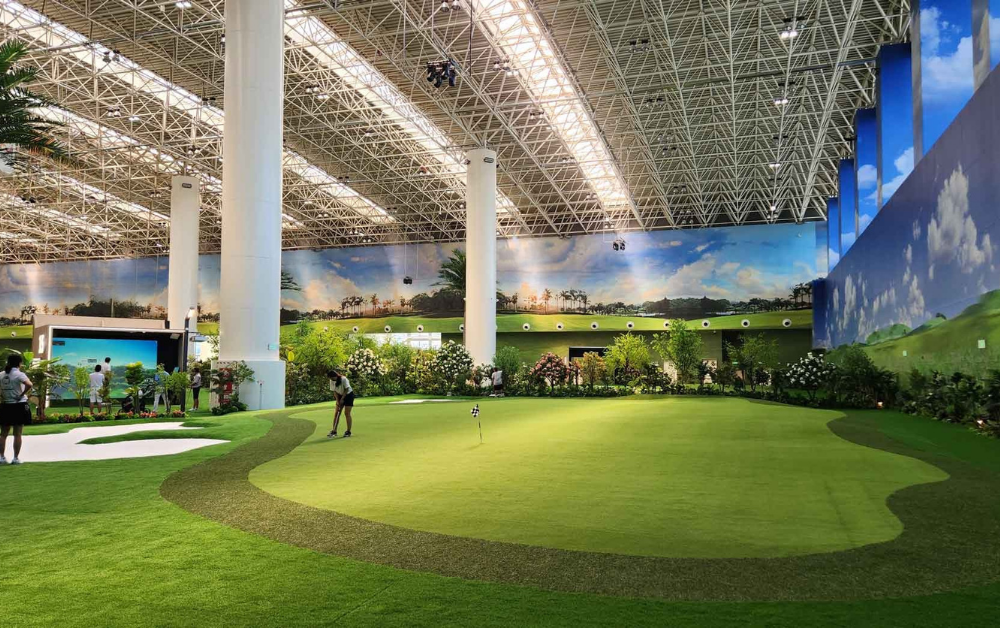
In the Ontario real estate market, an empty warehouse looks like a blank canvas. For an indoor golf developer, however, that "blank canvas" can quickly become a multi-million dollar liability if the structural bones aren't right. Scaling to a 40-bay mega-facility requires more than just high-end simulators; it requires a building that can handle the specific demands of Group A2 (Assembly) occupancy. At HKC Construction, we’ve seen projects stalled by overlooked details in the due diligence phase.
Before you sign a lease or purchase agreement, run your potential site through this 10-point structural red flag checklist.
1. The "Clear Height" Illusion
The Red Flag: A listing says "14ft ceilings," but the steel trusses, HVAC ducts, or sprinkler pipes hang down to 10ft.
The HKC Standard: To accommodate a 44-bay range with overhead launch monitors (like Full Swing or Trackman iO), you need a minimum of 12 feet of unobstructed "Clear Height." If a golfer's driver follow-through hits a sprinkler head, you don't just have a broken club, you have a flooded facility.
2. The Column Spacing "Swing Path"
The Red Flag: Structural columns spaced every 20 feet.
The Reality: A standard commercial golf bay is 14–16 feet wide. If your columns are poorly spaced, you will lose significant floor area to "dead zones" where a bay cannot fit. We look for "Clear Span" buildings or wide column grids (35ft+) to allow for back-to-back bay rows and safe spectator flow.
3. The "Change of Use" Parking Trap
The Red Flag: The site has 20 parking spots, which was fine for a warehouse, but it's now an "Assembly" space.
The Risk: In many Ontario municipalities (like Mississauga or Vaughan), the parking ratio for a sports facility is significantly higher than industrial use often requiring 2 to 3 spaces per hitting station. If the site doesn't have the asphalt to support your occupant load, your permit will be denied before you even break ground.
4. Insufficient Electrical Service (AMP Load)
The Red Flag: A standard 200-Amp service panel.
The Reality: 44 simulators, 44 high-spec PCs, commercial-grade projectors, and a full-service kitchen will easily outstrip a standard warehouse panel. Upgrading a transformer with a local utility like Alectra or Toronto Hydro can cost $50,000 to $150,000 and take 6+ months. We check for a 400-600 Amp minimum for mega-facilities.
5. Floor Levelness & PSI
The Red Flag: Sloped floors or cracked "settled" concrete slabs.
The Tech Issue: Modern simulators require a perfectly level floor for the hitting platform and the putting green to sync with the software. If the warehouse floor is sloped for drainage (common in former manufacturing sites), you will incur massive costs in self-leveling concrete compounds.
6. The "19th Hole" Fire Separation
The Red Flag: No existing fire-rated walls between the potential lounge and the sport area.
The OBC Rule: If you plan on a licensed lounge and snack bar, the Ontario Building Code (OBC) often requires a fire separation between the kitchen/bar area and the high-occupancy sports wing. If the building is non-combustible steel, this is easier; if it’s an older timber-frame "brick and beam" building, the costs to fire-rate the ceiling can be astronomical.
7. AODA Compliance: The "Ramp" Requirement
The Red Flag: Hitting areas that require a "step up" without space for a ramp.
The Law: Under the Accessibility for Ontarians with Disabilities Act (AODA), all commercial sport stations must be barrier-free. If you build raised platforms for your ball-return systems, you must have space for a 1:12 slope ramp. If your bays are too tight, you won't have room for the ramp, making the facility non-compliant.
8. HVAC "Active Load" Capacity
The Red Flag: A single, aging Rooftop Unit (RTU).
The Science: Warehouses are designed to keep "stuff" cold. Golf facilities need to keep "people" cool while they are physically active. 44 bays generate massive heat from technology and bodies. You need a system capable of high air-turnover and ERVs (Energy Recovery Ventilators) to keep the air fresh.
9. Sanitary Stack & Washroom Counts
The Red Flag: A single "shop" bathroom in the corner of the warehouse.
The Upgrade: Moving to A2 occupancy triggers a massive increase in the required number of toilets (OBC Table 3.7.4.3.A). For 100+ occupants, you will need to trench through the concrete floor to add a full bank of washrooms. This is a "silent killer" of budgets.
10. The Loading Bay Access
The Red Flag: No Grade-Level loading or small "courier" doors.
The Logistics: Simulators, 20-foot rolls of turf, and massive impact screens arrive on oversized skids. Without a Type B or C Loading Space or a drive-in door with at least 4m of clearance, you will pay a premium for "hand-bombing" materials into the site, increasing your labor costs by thousands.
Why Experience Matters
At HKC Construction, we don't just see a warehouse; we see the technical infrastructure required to make it a world-class destination. Our background in the precision-heavy world of Padel and Pickleball has taught us that the difference between a successful project and a "money pit" is in the details of the initial site evaluation.
Buying or leasing a site for your golf project?
Don't gamble on the structure. Contact HKC Construction for a Pre-Purchase Site Assessment. We’ll walk the floor with you and identify the red flags before they become your problem.
Build Your Premier Sports Landmark
From 44-bay indoor golf ranges and multi-sport turf fields to professional Padel and Pickleball facilities, HKC Construction specializes in high-performance sports infrastructure engineered for the Ontario market. Let's discuss your site feasibility, zoning, and project roadmap.
