.png)
.png)
.png)






The Complete Guide to Construction Financing in Ontario
For commercial developers and business owners in Ontario, the feasibility of a construction project often rests on one critical pillar: Capital Structuring.
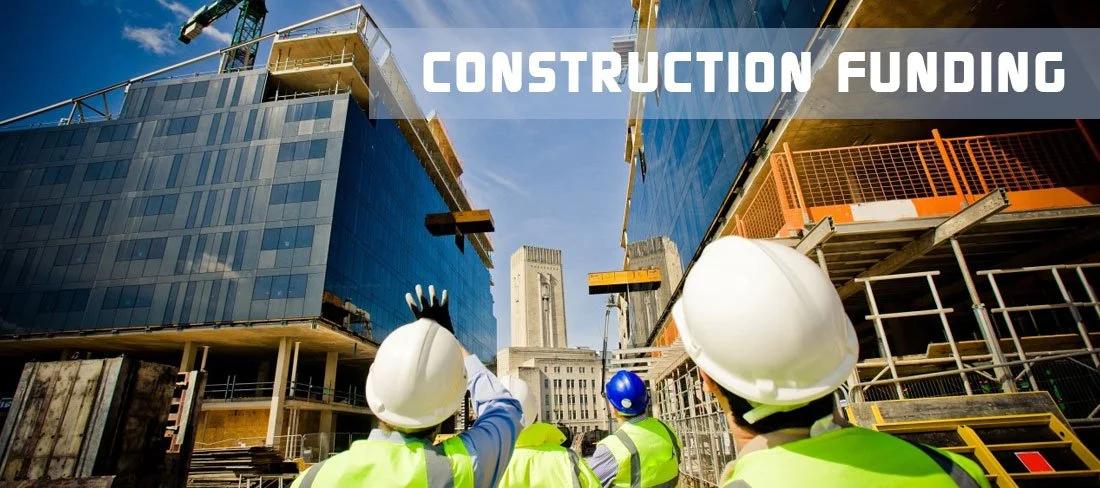
Construction financing is distinct from traditional real estate lending. It is higher risk, requires rigorous oversight, and operates on a draw schedule rather than a lump-sum payout. In today’s market, high interest rates and construction costs have made the "Capital Stack", the mix of debt, equity, and government incentives more important than ever. Whether you are planning a ground-up industrial facility in the GTA, a multi-residential development, or a comprehensive energy retrofit, understanding who holds the capital is the first step to breaking ground. This guide details the financing landscape in Ontario, from government-backed infrastructure banks to private lending solutions, and explains how HKC Construction plays a pivotal role in securing these funds.
1. The Core Concept: Construction Loans vs. Mortgages
Before identifying who to borrow from, it is essential to understand what you are borrowing.
Construction Loans are short-term, interest-only facilities. You do not receive the money all at once. Instead, funds are released in "Draws" or "Progress Advances" based on milestones verified by a Quantity Surveyor (e.g., Foundation Complete, Structure Enclosed).
Commercial Mortgages (or "Take-out Financing") come later. Once the building is complete and an Occupancy Permit is issued, the construction loan is paid off by a long-term mortgage. Lenders typically require you to have this exit strategy in place before construction begins.
The Capital Stack Ecosystem
Matching your project needs with the right capital partner.
- Lenders: CIB, BDC, CSBFP
- Interest Rates: Lowest (Sub-market)
- Focus: Policy goals (Decarbonization, Job Creation)
- LTV: High (Up to 100%)
- Lenders: BMO, RBC, TD, etc.
- Interest Rates: Competitive Market Rates
- Focus: Relationship & Asset Security
- Requirements: Strong covenant & proven team
- Lenders: CMHC Lenders, Private Funds
- Interest Rates: Higher (Risk-adjusted)
- Focus: Speed, Flexibility, or Specific Asset Class
- LTV: Variable (Up to 95% for CMHC)
2. Tier 1: Government & Strategic Partners
For projects involving energy efficiency, retrofits, or small business expansion, government-backed programs offer the most attractive terms (low interest, high loan-to-value).
Canada Infrastructure Bank (CIB)
The CIB is the heavyweight champion for large-scale energy retrofits. They lend to transformative infrastructure projects.
The Benefit: If your project reduces carbon by a set percentage (typically >30%), you get access to interest rates significantly below the market average.
Best For: Large commercial, industrial, or multi-residential portfolios.
Business Development Bank of Canada (BDC)
The BDC focuses on cash flow and business viability rather than just collateral.
The Benefit: Up to 100% financing for equipment and leasehold improvements, preserving your working capital.
Best For: Manufacturers upgrading machinery and owner-occupied commercial renovations.
Canada Small Business Financing Program (CSBFP)
Managed by ISED, this program shares the risk with lenders.
The Benefit: Government-backed financing for up to $1.15 million, covering land, buildings, and equipment.
Best For: Small businesses purchasing their first commercial property.
3. Tier 2: The Major Banks (The Big Five)
Ontario’s major financial institutions (BMO, RBC, TD, Scotiabank, CIBC) handle the bulk of commercial construction lending. However, they have evolved. They now offer "Sustainability Linked Loans" (SLLs).
BMO: A direct partner with the CIB, BMO’s Retrofit Program is aggressive on efficiency projects.
RBC & Scotiabank: Offer "Green Loans" for projects targeting LEED or Zero Carbon certifications.
The Requirement: To access these Tier 1 rates, lenders need to see a General Contractor with a track record. Construction delays add risk; a reputable builder mitigates that.
4. Tier 3: Specialized & Alternative Lenders
When traditional banks are too slow or strict, specialized lenders fill the gap.
CMHC & NHA-Approved Lenders (Multi-Residential)
For apartments or affordable housing, lenders like First National and Equitable Bank facilitate CMHC MLI Select loans.
The Benefit: 50-year amortization periods and 95% Loan-to-Cost ratios if you meet Energy Efficiency or Affordability criteria.
The Catch: You need a high energy efficiency score. HKC Construction works with energy modelers to ensure your build meets these specs.
Quasi-Equity & Private Lending
Quasi-Equity: Useful for high-growth companies with strong cash flow but few hard assets.
Private Lending: Offers speed and flexible terms for developers with complex credit situations, albeit at higher interest rates.
5. How to Secure Your Funding: The Process
Securing construction financing is a rigorous process. Lenders do not fund ideas; they fund executable plans.
The Pro-Forma & Budget: A rough guess per square foot is not enough. HKC Construction provides detailed preliminary budgeting (Class C or B estimates) to prove financial viability.
Technical Validation: For Green Loans, we coordinate with engineers to prove HVAC and envelope systems meet efficiency targets.
The Schedule of Values: We create a detailed roadmap breaking the project into line items (Demolition, Concrete, Mechanical) for monthly draws.
The Draw Process: Once construction starts, HKC submits monthly progress reports verified by a Quantity Surveyor to release funds.
6. Why Your Builder Matters to Your Banker
There is a direct link between your choice of Construction Manager and your financing terms. Lenders assess Execution Risk. They ask: "Can this contractor actually build this complex facility on this budget?"
Working with HKC Construction de-risks the project for the lender in three ways:
Bonding & Insurance: We carry the liability insurance and bonding capacity Tier 1 lenders require.
Incentive Capture: We ensure the build matches the grant application. If the installed equipment doesn't match the paperwork, you lose the money. We prevent that.
Cost Certainty: Our robust tendering process ensures the budget you gave the bank is the budget we stick to.
The Bottom Line: Construction financing is not just about interest rates; it is about successful execution. By partnering with HKC Construction early in the design phase, we help you build a package that lenders trust.
Our Financial Ecosystem
We work with Canada's top lenders to secure your project funding.