.png)
.png)
.png)






FCC’s $1B Agri-Food Fund: Scaling Canada's Food Plants
Farm Credit Canada (FCC) has launched a $1 Billion Agri-Food Project Finance Fund alongside a $150 Million allocation to Velocity Agri-Capital Partners. The program targets construction-ready food and beverage manufacturing expansions across Canada that expand processing capacity, modernize automation, and secure domestic supply chains.
A Historic Capital Push for Canadian Food Processors
Canada’s agri-food sector faces compounding pressure: persistent cold storage bottlenecks, rising raw material throughput demands, and strict regulatory enforcement from the Canadian Food Inspection Agency (CFIA).
To bridge the infrastructure deficit, the federal government and Farm Credit Canada (FCC) deployed a joint finance initiative:
$1 Billion Project Finance Fund (FCC): Direct debt and structured capital financing for shovel-ready processing, value-added packaging, and cold chain expansions.
$150 Million to Velocity Agri-Capital Partners: Equity and scale-up growth capital targeting high-potential Canadian food enterprises.
With FCC accepting Expressions of Interest (EOIs) for just 60 days, processors must rapidly translate high-level growth concepts into vetted, actionable facility designs.
Program Snapshot: Requirements & Criteria
| Metric | Specification Details |
|---|---|
| Capital Envelope | $1.0 Billion CAD (Project Finance) + $150 Million CAD (Venture/Growth) |
| Application Process | Two-Stage: Expression of Interest (EOI) followed by formal Underwriting |
| Intake Deadline | 60-Day Initial Window |
| Target Projects | Processing capacity expansion, secondary value-add manufacturing, cold-storage logistics |
| Mandatory Requirement | "Construction-Ready" (Vetted cost estimates, engineering layout, zoning/servicing confirmation) |
What FCC Means by "Construction-Ready"
Institutional project finance programs avoid open-ended speculation. If an EOI submission lacks defensible civil, structural, and mechanical due diligence, it risks being set aside.
Concept Design
- Square-foot cost averages
- Unverified process utilities
- Assumed CFIA / HACCP layout
Construction-Ready
- ✓ AACE Class 3/4 line-item estimates
- ✓ Verified electrical & wastewater loads
- ✓ Zoned hygienic segregation (Raw / RTE)
To secure capital approval, your project submission must demonstrate:
AACE Class 3/4 Cost Estimates: Verified material takeoffs, trade packages, and constructability contingency models rather than speculative allowances.
Hygienic Flow & CFIA/HACCP Spatial Zoning: Documented separation between raw material receiving, wet-washdown rooms, and high-care Ready-to-Eat (RTE) zones with positive air cascades.
Process Utility Integration: Detailed engineering for heavy mechanical drops: process steam, glycol cooling loops, sanitary drainage, and industrial wastewater pre-treatment.
Site Control & Municipal Approvals: Confirmation of Site Plan Approval (SPA) pathways, utility power allocation, and structural slab engineering for heavy automated machinery.
High-Priority Facility Investments
1. High-Speed Processing & Automation
Upgrades accommodating robotic packaging, automated bottling/canning lines, heavy machine pads with dynamic vibration dampening, and high-amp electrical sub-distribution.
2. Temperature-Controlled Cold Storage
Blast freezers, cold-staging docks, and insulated envelope expansions utilizing high-performance Insulated Metal Panels (IMPs) and hygienic vapor-sealed floor systems.
3. Sanitary Infrastructure Upgrades
Complete washdown overhauls with stainless steel slot trenches, Clean-In-Place (CIP) piping loops, seamless antimicrobial flooring, and segregated HVAC filtration.
Regional Spotlight: Ontario’s Processing Clusters
While the fund applies nationally, Ontario is uniquely positioned for rapid capital deployment:
Mississauga & Greater Toronto Area (GTA): As one of Canada’s largest food and beverage clusters, the focus here is on brownfield modernization, vertical cold storage additions, and live-plant automation retrofits. Regional economic bodies like Invest Mississauga actively support processors in navigating site planning and utility allocations.
Southwestern Ontario Food Corridor: Spanning Guelph, Brantford, and London, this corridor accommodates large-scale greenfield construction, primary agricultural processing facilities, and bulk value-added distribution hubs.
Maintaining Operations: The Zero-Downtime Rule
In food manufacturing, downtime is the largest hidden cost of any expansion. Halting active lines to accommodate structural retrofits or utility tie-ins directly threatens baseline revenues.
Executing a capital build while processing requires rigorous containment:
Hermetic Cleanroom Partitions: Erecting floor-to-ceiling negative-pressure barriers with HEPA air scrubbers to guarantee zero dust, moisture, or particulate migration into active production zones.
Antimicrobial Traffic Control: Establishing independent trade entry routes, dedicated sanitization corridors, and isolated staging yards to eliminate biological vectors (such as Listeria risks).
Off-Shift Tie-Ins: Scheduling all structural penetrations, heavy electrical hookups, and central process piping cuts during pre-planned plant sanitation cycles or weekend maintenance windows.
Frequently Asked Questions
How long is the FCC Agri-Food Expression of Interest (EOI) open?
FCC is accepting Expressions of Interest for 60 days from the launch date. Project owners must submit project scopes, estimated timelines, and capital requirement models within this period.
Can funding be applied to live-facility retrofits and expansions?
Yes. Brownfield retrofits, secondary line installations, and cleanroom expansions qualify alongside new greenfield builds, provided they expand capacity or strengthen domestic food supply chain resilience.
Why is early contractor engagement required for the EOI?
FCC evaluates projects based on their "construction-readiness." Involving a specialized industrial contractor provides the validated Class 3/4 cost models, constructability timelines, and CFIA-compliant designs required during underwriting.
Prepare Your Facility for FCC Financing with HKC
The 60-day window to participate in the $1 Billion Agri-Food Project Finance Fund requires immediate, disciplined pre-construction planning.
HKC Construction is a specialized Canadian design-build industrial contractor delivering turnkey food and beverage manufacturing facilities, cleanrooms, and cold-storage operations. We provide:
Pre-Construction Planning & Cost Certainty: Class 3/4 budget validation to substantiate your FCC funding submission.
HACCP & CFIA Compliance by Design: Complete architectural and MEP integration engineered to pass federal inspection.
Live-Site Plant Execution: Specialized dust-containment and off-shift phasing to ensure zero disruption to your daily production quotas.
Proven Execution in Live Food Processing Facilities
FCC project finance requires verified constructability. Here is how HKC has delivered large-scale expansions while safeguarding production continuity.
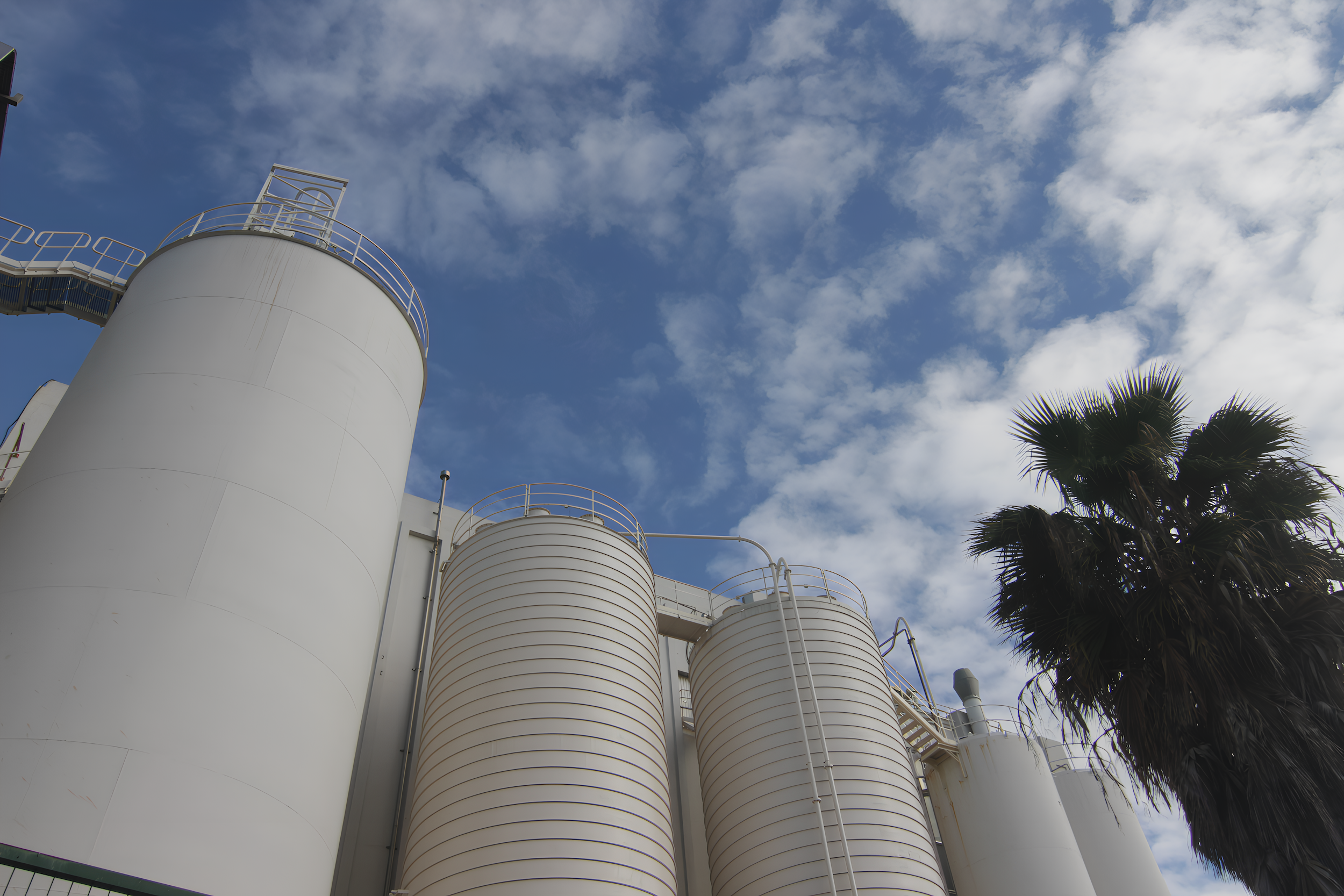
Crispy Just Baked Plant
Large-scale renovation of a 204,000 sq. ft. facility, including the engineering and precision installation of massive industrial silos—substantially boosting bulk raw ingredient storage and automated processing capabilities.
TWI Foods Inc.
Managed the multi-stage expansion including a 21,000 sq. ft. warehouse shipping addition and a 38,000 sq. ft. complex physically connecting two active facilities—all completed under continuous 24-hour operating conditions with zero production downtime.
Is Your Expansion Project "Construction-Ready"?
Connect with HKC Construction’s industrial food & beverage team to conduct an expedited site assessment and build out the construction budgets required for your FCC financing package.
Schedule a Pre-Construction Consultation