.png)
.png)
.png)






How to Get COR™ Certified and Why It's a Non-Negotiable Standard in Construction
In the construction industry, safety isn't just a priority, it's the foundation upon which every successful project is built. A safe worksite is an efficient, well-managed, and productive one. But how do clients and partners truly know a contractor is committed to the highest safety standards? The answer is the Certificate of Recognition (COR™).
As a COR™ certified company, HKC Construction lives and breathes the principles of this program every day. It’s a core part of our identity and a promise we make to our clients, our team, and our partners. In this guide, we’ll explore what the COR™ program is, the significant benefits it offers, and the step-by-step process to achieving this critical certification.
Why COR™ is More Than Just a Certificate
The Certificate of Recognition (COR™) is a nationally recognized standard that verifies a company has a comprehensive and fully implemented health and safety management system. This made-in-Canada certification tells employees, clients, and regulators that you are proactive about preventing injuries and promoting a culture of safety.
But the benefits go far beyond compliance. As BDC Consultant Fred Andersen notes, “COR minimizes risks to employees and your organization, and it can provide significant cost savings. Safety also goes hand in hand with quality. A company with good safety also tends to have good housekeeping and be well organized.”
The tangible benefits of COR™ certification include:
Reduced Costs: Businesses with strong safety programs see a direct reduction in injury rates, leading to lower worker compensation premiums, fewer legal risks, and less property damage.
Increased Productivity: A safe and organized site experiences fewer delays from incidents, equipment damage, or stop-work orders, keeping your project on schedule and on budget.
Access to Premium Projects: COR™ certification is often a mandatory requirement to bid on and win public sector (e.g., municipal, provincial) and large-scale private commercial construction projects.
Enhanced Reputation: It demonstrates a top-tier level of professionalism and care, making you a more attractive partner for clients, investors, and high-quality tradespeople.
Your Roadmap to COR™ Certification: A Step-by-Step Guide
Based on our experience and industry best practices, here is a clear roadmap to achieving COR™.
Step 1: Secure Unwavering Management Commitment
A successful safety program starts at the top. The owner and entire management team must be fully committed to the principles of health and safety. This involves appointing a dedicated employee to champion the certification process and investing the necessary resources. As Andersen says, “If owners and managers aren’t committed... your chance of success is reduced.”
Step 2: Understand Your Legal Obligations
Every construction company in Ontario must comply with the Occupational Health and Safety Act (OHSA) and its regulations. The first step is to fully understand these legal requirements. A failure to do so can result in significant liability in the event of an incident. The COR™ process helps ensure you meet and exceed these legal standards.
Step 3: Develop and Implement a Health and Safety Program
If you don't already have one, you must create a formal health and safety management program. The core of this is your Health and Safety Manual, a comprehensive document outlining safe job procedures, hazard assessments, emergency response plans, and more. This program must be put into practice through employee training, proper use of personal protective equipment (PPE), detailed documentation, and regular worksite inspections.
Step 4: Partner with a Certifying Body and Undergo an Audit
To get certified, you must work with a COR™ certifying partner. For the construction industry in Ontario, the primary partner is the Infrastructure Health & Safety Association (IHSA).
The process involves:
Training: Key employees will be trained by the IHSA on the COR™ program and audit standards.
Implementation: You will typically need to provide 6 to 9 months of evidence showing your safety program has been fully operational.
The Audit: An external auditor will conduct a thorough review, which includes employee interviews, workplace observations, and a detailed examination of your program documentation and records.
For smaller businesses (10 or fewer employees), a Small Employer Certificate of Recognition (SECOR) is available. This has less onerous requirements and typically involves a self-assessment rather than a full external audit.
Step 5: Commit to Continual Monitoring and Improvement
Achieving COR™ is not a one-time event; it is a commitment to continuous improvement. The certification requires regular maintenance audits and recertification to ensure your safety program remains effective and evolves with your business. As Andersen wisely puts it, “Safety should be a way of life.”
The HKC Promise: What Our COR™ Certification Means for You
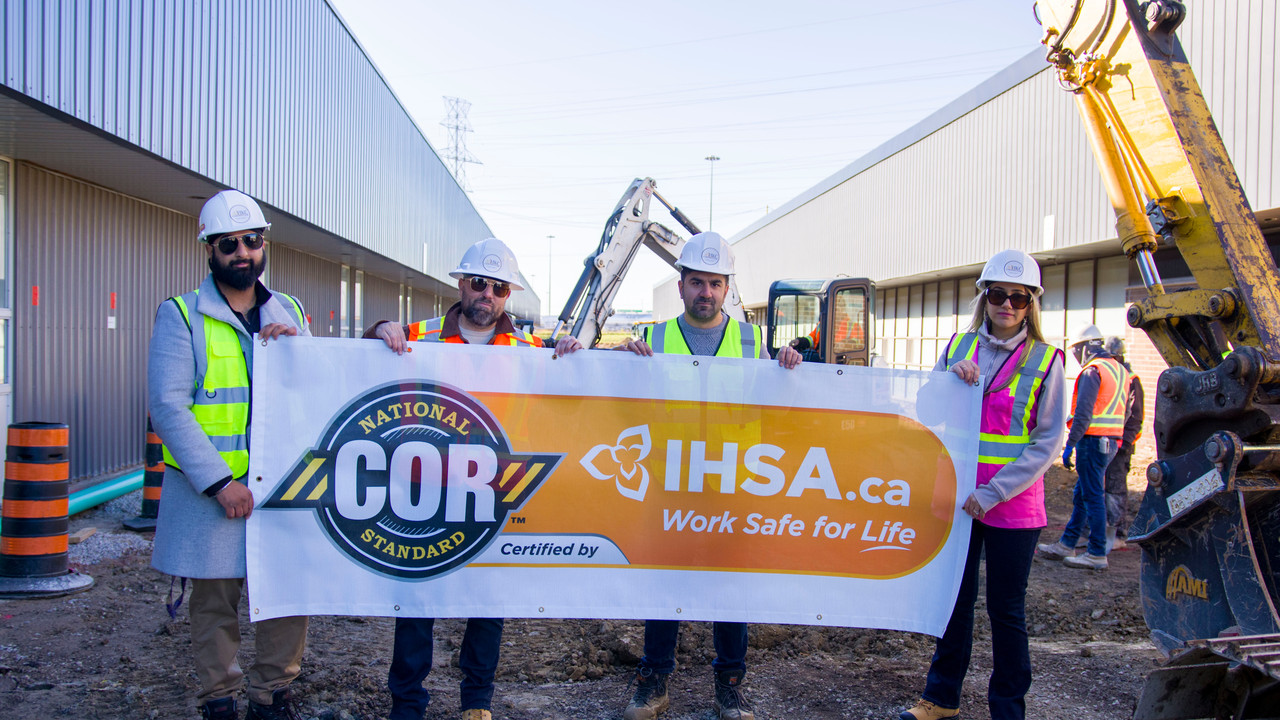
At HKC Construction, our COR™ certification is your assurance. It means that when you partner with us, you are choosing a contractor whose commitment to safety is verified, documented, and deeply embedded in our culture. It means less risk for your project, greater peace of mind for your stakeholders, and a partner who upholds the highest standards of professionalism and quality on your job site, every single day.
Choose a partner who builds on a foundation of safety. Contact HKC Construction to discuss your next project.
Ready to Build safely?
Partner with HKC Construction for COR®-certified safety excellence. Let's discuss how our safety-first approach can benefit your next project.
