.png)
.png)
.png)






The 2026 Horizon: 10 Mega Projects That Are Changing Ontario Forever
Executive Overview of the Provincial Infrastructure Mandate
The province of Ontario is currently navigating a period of unprecedented capital transformation, characterized by a ten-year, $200 billion investment strategy designed to modernize the regional economy and accommodate a rapidly expanding population. As of early 2026, the construction sector has solidified its role as a primary engine of provincial Gross Domestic Product (GDP), with the industry’s output outpacing the all-industry average and achieving a growth rate of 1.3 per cent in the most recent fiscal quarter. This momentum is driven by a unique convergence of two major paradigms: a massive nuclear energy renaissance and a multi-billion-dollar transit revolution.
This analytical report examines the top ten upcoming and ongoing mega-projects in Ontario, exploring their technical scope, budgetary requirements, and broader socioeconomic implications. Furthermore, it situates these projects within the context of a challenging but opportunistic economic landscape, where labor shortages and material cost volatility are being met with rapid technological innovation and strategic private-sector partnerships. For organizations like HKC Construction, which brings over 15 years of specialized experience in commercial, industrial, and institutional sectors, this era represents a critical opportunity to demonstrate the value of excellence and collaborative project management in a high-stakes environment.
The Macroeconomic Context: Navigating 2026
The construction market in Canada is projected to reach a value of approximately CAD $261.30 billion by 2030. However, the path to this expansion is marked by significant headwinds. For 2026, real GDP growth projections for the province remain conservative at 2.2 per cent, tempered by global trade tensions and the impact of tariffs on essential imports. Approximately 8 per cent of total construction costs in the region are tied directly to U.S. imports, making projects sensitive to currency fluctuations and shifts in cross-border trade policy.
| Indicator | 2024 (Actual/Est) | 2025 (Forecast) | 2026 (Forecast) | 2027 (Forecast) |
|---|---|---|---|---|
| Real GDP Growth (%) | 0.3 | 1.9 | 2.2 | 2.2 |
| Consumer Price Index (Index Value) | 87.9 | 92.3 | 94.4 | 95.8 |
| Unemployment Rate (Variance vs. Prev. Budget) | +0.5% | +1.0% | +1.0% | +1.0% |
| Housing Starts (Thousands of Units) | 74.6 | 71.8 | 74.8 | 82.5 |
| Construction Sector GDP Growth (QoQ) | 1.3% | 1.4% (Proj) | 1.5% (Proj) | 1.6% (Proj) |
Source: Ontario Ministry of Finance / Statistics Canada
One of the most persistent structural challenges facing the industry is the chronic labor shortage. Ontario is expected to see the retirement of nearly 270,000 experienced tradespeople over the next decade, while simultaneously requiring 154,100 new workers by 2034 just to deliver the currently planned infrastructure and housing pipeline. This reality is forcing a turning point in digital adoption. According to recent industry surveys, 90 per cent of construction leaders now view tools such as Building Information Modeling (BIM), artificial intelligence (AI), and digital twins as essential to improving efficiency and addressing the labor gap.
In this environment, the demand for specialized expertise has never been higher. Projects are becoming increasingly complex, schedule-driven, and technically demanding. General contractors with a proven track record of managing multifaceted site works, such as HKC Construction, play a vital role in de-risking these projects for stakeholders. By prioritizing integrity and innovation, such firms ensure that the high standards required for modern institutional and industrial builds are consistently met.
Project 1: Pickering Generating Station Refurbishment ($26.8 Billion)
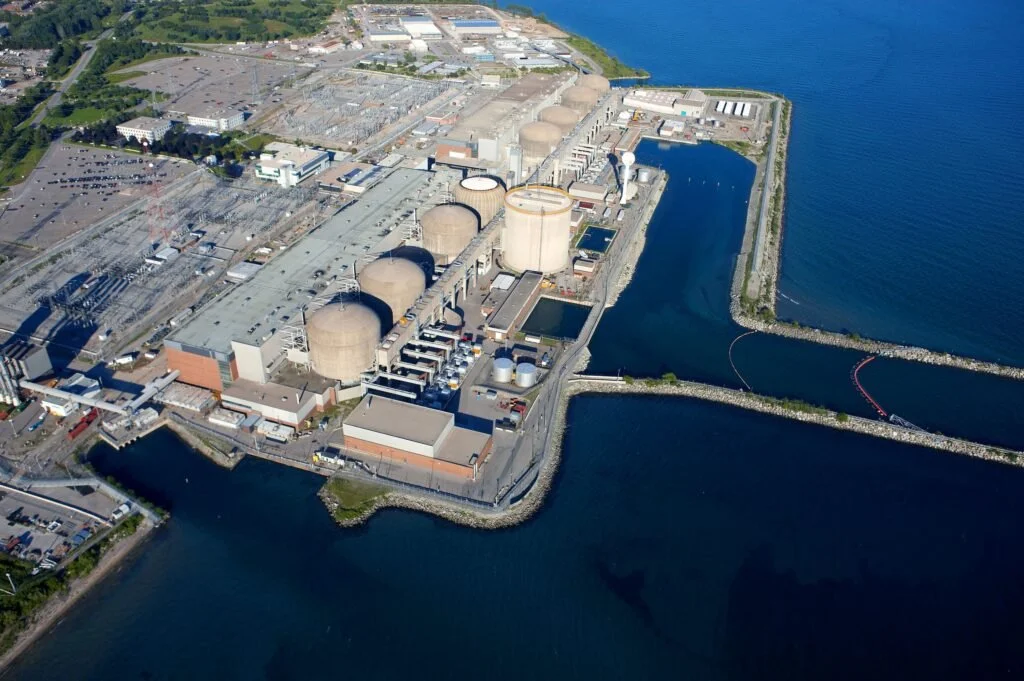
The top-ranked project in Canada by value is the Pickering Generating Station Refurbishment, a massive life-extension initiative for the facility’s “B” nuclear units. Following official approval from the provincial government, Ontario Power Generation (OPG) moved into the execution phase in early 2026.
The scope of this endeavor involves the comprehensive overhaul of four CANDU (Canada Deuterium Uranium) reactors. The engineering complexity of a CANDU refurbishment is unparalleled, requiring the replacement of thousands of high-precision components, including fuel channels and feeder tubes, while adhering to the world’s most stringent safety protocols. This project is not merely a maintenance cycle but a complete revitalization intended to extend the station's operational life by at least 30 years.
The socioeconomic impact of the Pickering refurbishment is immense. It is projected to create approximately 30,500 jobs during the construction phase and ultimately generate enough reliable, low-carbon power to sustain 2.2 million homes. For the broader construction ecosystem, this project stimulates a high demand for specialized trades, heavy equipment operators, and project management experts. Firms like HKC Construction, which emphasize a culture of excellence and a "client-first" approach, reflect the type of operational discipline required to support the secondary and tertiary supply chains of such gargantuan energy projects.
Project 2: Darlington New Nuclear Project ($20.9 Billion)
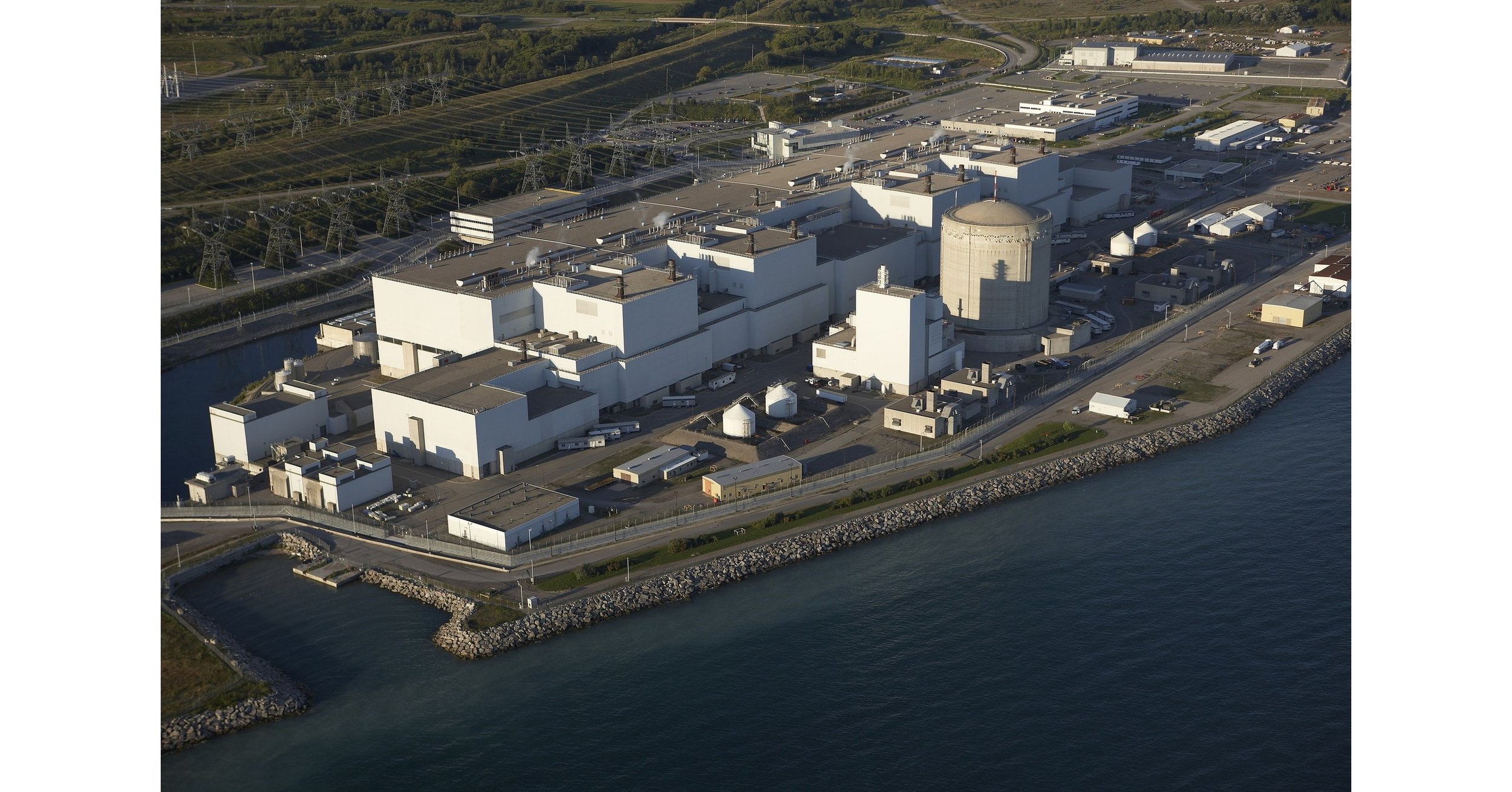
In Bowmanville, the Darlington New Nuclear Project is setting a global benchmark as the first grid-scale deployment of Small Modular Reactors (SMRs) in a G7 nation. Managed by OPG, the project involves the construction of four GE Hitachi BWRX-300 units.
As of 2026, excavation for the first unit’s reactor building is nearing completion, transitioning from site preparation to structural construction. SMRs represent a paradigm shift in nuclear engineering; their smaller footprint and modular design allow for a more streamlined construction process compared to traditional large-scale reactors. This project is a critical component of Ontario’s plan to meet rising electrification demands driven by the transition to electric vehicles (EVs) and the growth of the digital economy.
The Darlington SMR project is expected to provide clean power to 300,000 homes and support 1,600 jobs during construction. Beyond energy security, it positions Canada as a global leader in SMR technology, creating a pathway for the export of this technology by 2030. The success of such pioneering builds relies on the integration of cutting-edge methodologies a principle that mirrors HKC Construction’s own commitment to embracing new technologies to deliver solutions that exceed industry standards.
Project 3: GO Expansion On Corridor Works ($15.7 Billion)
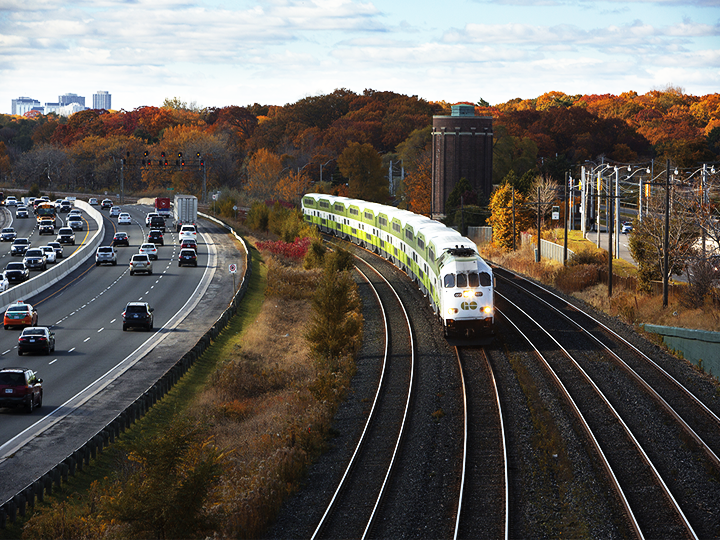
The GO Expansion program is the largest transit project in Ontario’s history, aimed at transforming the regional rail network into a high-frequency, all-day system. The “On-Corridor” component is a multi-billion-dollar scope that includes the electrification of over 600 kilometers of track and the modernization of signaling systems across the Greater Golden Horseshoe.
The objective is to achieve 15-minute service frequencies, effectively turning a commuter rail system into a rapid transit network. This involves:
The installation of overhead catenary systems (OCS) for electric trains.
The construction of new maintenance and storage facilities.
Comprehensive upgrades to existing track infrastructure to handle higher speeds and increased volumes.
Managed by Metrolinx and Infrastructure Ontario through a progressive partnership model, the project represents a massive civil engineering challenge. The work must be performed while maintaining existing rail service, necessitating sophisticated logistics and schedule management. This requirement for "zero-downtime" or minimal-disruption construction is an area where companies like HKC Construction have developed significant expertise, particularly in their industrial and food manufacturing plant expansions.
Project 4: Peter Gilgan Mississauga Hospital ($14.0 Billion)
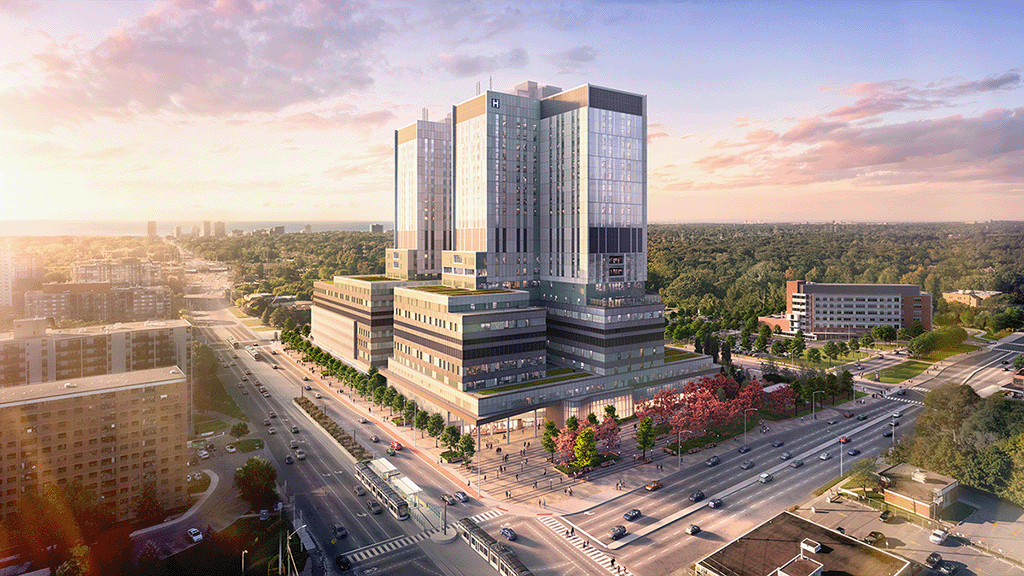
The redevelopment of the Mississauga Hospital is a cornerstone of the province's healthcare infrastructure plan. Once complete, the 2.8-million-square-foot facility will be the largest teaching hospital in Canada. The project triples the capacity of the current hospital to serve the rapidly growing population of Peel Region and West Toronto.
The technical specifications for the hospital are ambitious:
A 22-storey patient care tower.
Over 950 beds, including 350 new fully private rooms.
One of the largest emergency departments in Ontario.
The Shah Family Hospital for Women and Children, featuring a 200,000-square-foot dedicated space and a massive Neonatal Intensive Care Unit (NICU).
As of early 2026, excavation is more than 45 per cent complete, with construction crews digging out the massive footprint required for the patient tower. The project is being delivered via a Public-Private Partnership (P3) with the ED+PCL Healthcare Partners consortium. For specialized contractors, the healthcare sector requires distinct expertise in medical-grade electrical systems, specialized ventilation, and the use of materials that support sterile environments all areas where HKC Construction’s "Health & Wellness" division excels.
Project 5: Bruce Power Refurbishment ($13.0 Billion)
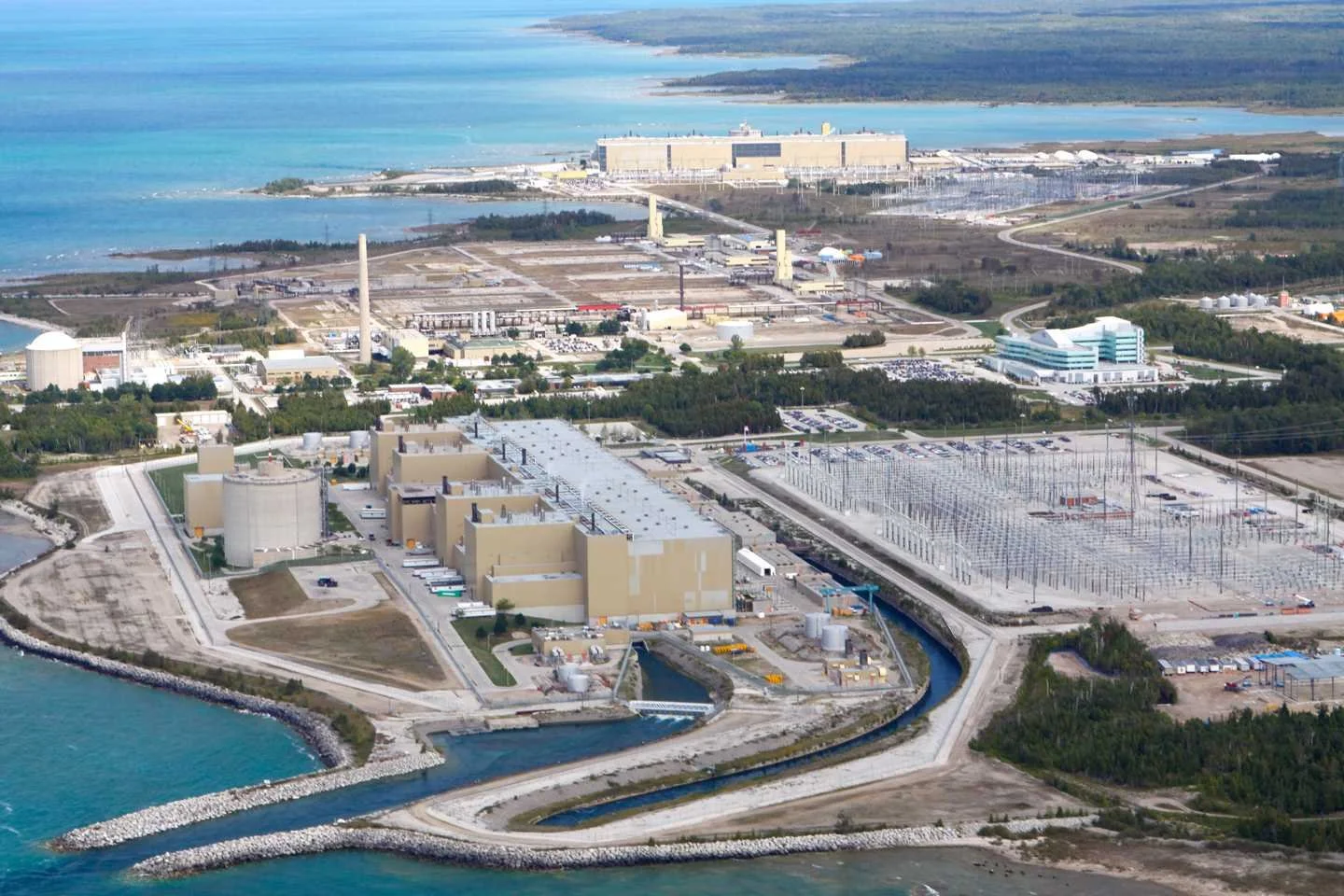
The Bruce Power site in Tiverton is undergoing a multi-decade major component replacement (MCR) program to refurbish six of its eight nuclear units. This project ensures that the world’s largest operating nuclear facility will continue to provide clean, reliable power through 2064.
By early 2026, several units have been successfully returned to service ahead of schedule, with the Shoreline Power Group utilizing advanced project controls to accelerate the remaining work. The refurbishment involves the removal and replacement of pressure tubes, calandria tubes, and feeder pipes. This high-intensity mechanical work is supported by a robust regional supply chain, creating thousands of high-skilled jobs in Southwestern Ontario. The emphasis on long-term partnerships and shared success in the Bruce Power project aligns with the collaborative principles that HKC Construction fosters with its own subcontractors and clients.
Project 6: Darlington Nuclear Refurbishment ($12.8 Billion)
The Darlington Nuclear Refurbishment, focused on the overhaul of the site’s four existing reactors, reached a historic milestone in early 2026. The project was completed four months ahead of schedule and $150 million under budget—a rare achievement for a mega-project of this scale.
This success is attributed to the "lessons learned" during the early phases of the project, which allowed the teams to refine their execution strategies for the final units. The project not only secures Ontario's energy future for another 30 years but also demonstrates the effectiveness of the province’s project delivery models. It highlights the importance of precision and meticulous planning, values that HKC Construction integrates into every project, from commercial renovations to complex industrial builds.
Project 7: Ontario Line ($11.0 Billion)
The Ontario Line is a 15.6-kilometer standalone subway line that will connect Exhibition Place to the Ontario Science Centre, featuring 15 stations and connecting to dozens of other transit routes. This project is designed to relieve the extreme pressure on the TTC’s existing Line 1 and Line 2.
Currently in a high-intensity construction phase, the project reached several milestones in 2025 and early 2026, including the excavation of launch shafts for subway tunnels at Exhibition Station and the commencement of work at southern alignment stations like Moss Park and Corktown. The delivery of the Ontario Line involves multiple contracts, including the Pape Tunnel and Underground Stations packages, which are currently progressing through design and early construction.
Project 8: GO Expansion Early Works ($10.5 Billion)
The Early Works phase of the GO Expansion program encompasses hundreds of preparatory projects across the Greater Toronto and Hamilton Area (GTHA). These works are essential to clearing the path for the massive On-Corridor electrification project.
Scope items include:
Grade separations to eliminate railway crossings.
Bridge expansions to accommodate additional tracks.
Major station renovations and the construction of new passenger platforms.
Utility relocations and environmental mitigation efforts.
These projects are often technically challenging because they occur in high-traffic, built-up urban environments. This type of municipal site work—including site reinstatement and complex utility coordination is a core competency of firms like HKC Construction, which has extensive experience working with municipal partners like the Region of Peel and the Town of Huntsville.
Project 9: TTC Vehicles Program ($7.2 Billion)
To maintain and expand Toronto’s transit capacity, the TTC is engaged in a $7.2 billion vehicle procurement and maintenance program. The priority for 2026 is the replacement of the aging subway train fleet on Line 2 (Bloor-Danforth), many of which have reached the end of their operational life.
This program also includes:
The procurement of 60 additional streetcars to support growing ridership.
The acquisition of hundreds of zero-emission buses (e-buses) as part of the City of Toronto’s TransformTO climate strategy.
The construction and expansion of maintenance garages and charging facilities to support an electrified fleet.
The transition to a zero-emission fleet requires a complete reimagining of industrial garage spaces, including heavy-duty HVAC for air quality and specialized electrical infrastructure sectors where HKC Construction provides tailored design-build solutions.
Project 10: Hazel McCallion LRT ($5.6 Billion)
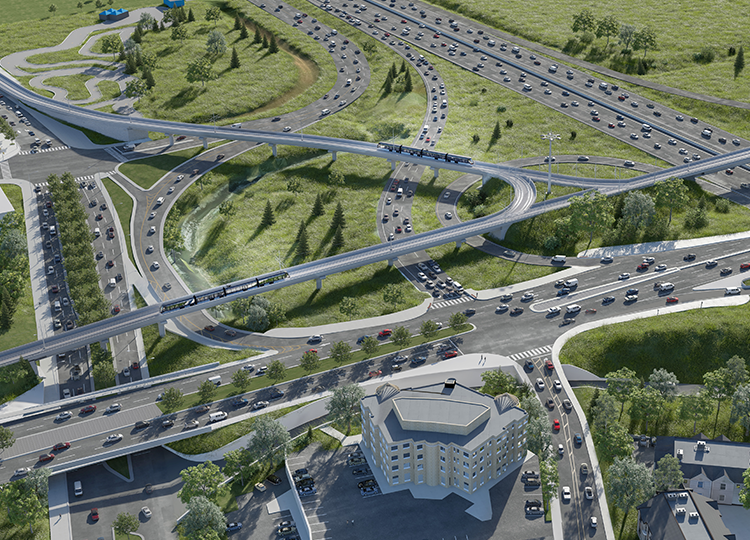
The Hazel McCallion Light Rail Transit (LRT) is an 18-kilometer line running along Hurontario Street through Mississauga and Brampton. By early 2026, the project has entered the final testing and commissioning phase for the light rail vehicles.
This project serves as a critical north-south transit spine, connecting to the Milton and Lakeshore West GO lines as well as the Mississauga MiWay and Brampton Züm bus networks. The LRT is a catalyst for higher-density development along the Hurontario corridor, driving demand for new commercial and residential construction. HKC Construction’s expertise in retail and commercial "build-out" services positions it as a key partner for businesses looking to establish a presence along these new transit-oriented corridors.
| Project Name | Sector | Budget (CAD) | Key 2026 Milestone |
|---|---|---|---|
| Pickering Refurbishment | Energy (Nuclear) | $26.8 Billion | Transition to Execution Phase |
| Darlington New Nuclear | Energy (Nuclear) | $20.9 Billion | SMR Reactor Building Excavation |
| GO Expansion (On-Corr) | Transit | $15.7 Billion | Electrification Design Finalization |
| Mississauga Hospital | Healthcare | $14.0 Billion | 22-Storey Tower Foundation Work |
| Bruce Power Refurbish | Energy (Nuclear) | $13.0 Billion | Multiple Units Returned to Service |
| Darlington Refurbish | Energy (Nuclear) | $12.8 Billion | Substantial Completion & Close-out |
| Ontario Line | Transit | $11.0 Billion | Southern Station Excavation |
| GO Expansion (Early) | Transit | $10.5 Billion | Completion of Major Grade Separations |
| TTC Vehicles Program | Transit | $7.2 Billion | Line 2 Subway Train Procurement |
| Hazel McCallion LRT | Transit | $5.6 Billion | Final Testing & Commissioning |
Source: Infrastructure Ontario / Government of Ontario (2026)
Strategic Industrial Growth: The Volkswagen PowerCo Gigafactory
While not in the top ten by public budget alone, the Volkswagen PowerCo facility in St. Thomas is a critical "mega" project for Ontario’s industrial future. With a $7 billion investment, it will be Canada’s largest EV battery plant.
Construction is currently in a high-intensity phase, with major building foundations being poured throughout 2026. The project involves more than 32,500 cubic meters of concrete and nearly 5,000 tonnes of rebar. Once operational in 2027, the plant will produce enough batteries for one million vehicles annually and employ 3,000 people.
This project highlights the growing trend of "gigafactories" and the need for large-scale, high-performance industrial construction. HKC Construction’s specialization in warehouse and manufacturing construction specifically their experience with reinforced flooring, specialized drainage, and high-clearance structures makes them an ideal partner for the industrial supply chain that will inevitably grow around the St. Thomas site.
Highway Expansion and Northern Resource Access
The province is also advancing critical highway projects to alleviate gridlock and unlock northern resources.
Highway 413 and the 401 Tunnel
The government is moving forward with Highway 413, a 52-kilometer corridor in the western GTA designed to bypass congestion in Brampton and Vaughan. Estimates for this project range from $14 billion upwards to $30 billion, depending on the inclusion of transitways and environmental mitigations. In 2026, work will focus on the Bovaird Drive underpass and the Highway 10 underpass. Simultaneously, the province is studying the feasibility of a massive tunnelled expressway under Highway 401, which would represent one of the most complex tunneling projects in North American history.
Roads to the Ring of Fire
In Northern Ontario, an accelerated plan has been released to build all-season roads to the Ring of Fire region. Construction on the Webequie Supply Road is slated to begin in June 2026, with the Marten Falls Community Access Road following in August 2026. These roads are essential for unlocking $22 billion in critical minerals needed for the global battery supply chain.
HKC Construction: Bridging the Gap in Professional Excellence
As mega-projects dominate the headlines, the broader construction ecosystem relies on established, high-performance general contractors to deliver the essential commercial and industrial infrastructure that supports these developments. HKC Construction, a 50 per cent woman-owned business, has built a national reputation on the foundation of integrity, excellence, and innovation.
With experience spanning over 2,500 projects, HKC Construction serves as a vital partner for institutional and commercial clients. Their portfolio includes everything from high-security courthouse renovations to "live-airport" retail upgrades at Toronto Pearson.
| Sector | Key Services Provided | Notable Portfolio Example |
|---|---|---|
| Industrial | Warehouse construction, manufacturing plants, cold storage, silos. | TWI Foods (58,000+ Sq Ft Expansion) |
| Retail | Fit-outs, facade updates, high-traffic retail environments. | Walmart Canada (100+ Locations) |
| Healthcare | Medical clinics, therapy centers, sterile environments. | Specialized Clinical & Wellness Spaces |
| Institutional | Educational facilities, government buildings, security areas. | London Court House & UOF GeoDesign Lab |
| Hospitality | Hotel construction, commercial kitchens, luxury lodging. | Hard Rock Cafe & Hilton/Marriott Projects |
HKC’s approach is particularly suited to the current market challenges. By utilizing advanced construction management techniques and a "design-build" model, the company minimizes risks for clients and ensures transparent cost control—critical in an era of material price volatility. Their dedication to creating a diverse and inclusive workforce also addresses the industry’s labor shortage by empowering a broader pool of talent, including women and veterans.
Technological Advancements and Sustainability Trends
In 2026, sustainability and technology are no longer auxiliary considerations; they are core requirements for project viability and financing. Federal and provincial policies now prioritize low-carbon materials and electrified transport infrastructure.
The Role of Artificial Intelligence and BIM
Artificial intelligence is being deployed across Ontario's mega-projects to optimize supply chains and strengthen logistics, particularly in container terminals and transit maintenance facilities. Building Information Modeling (BIM) has become standard for high-performance builds like the Mississauga Hospital, allowing for real-time collaboration and the reduction of rework.
Green Building and Energy Efficiency
There is a growing trend toward "green building" in the commercial sector, where feasibility is increasingly tied to the ability to secure green financing. HKC Construction integrates these trends by focusing on energy-efficient lighting, high-performance HVAC systems, and sustainable materials in their commercial and lodging projects.
Labor Force Dynamics: The New Generation of Builders
The industry is seeing a promising shift as younger workers enter the trades. Forecasts call for a 13 per cent increase in workers aged 24 and under entering the construction workforce by 2030. However, training and retention remain critical.
The provincial government is investing an additional $1 billion in the Skills Development Fund to help train the next generation of electricians, welders, and heavy equipment operators. For companies like HKC Construction, which is recognized as a "Great Place to Work" for 2026-2027, investing in the future of their employees is a core business strategy. By fostering a workforce where every member can excel, such firms ensure they remain resilient in the face of structural labor challenges.
| Role Category | Current Workforce (2025) | Required Growth by 2034 | Key Pressure Points |
|---|---|---|---|
| Skilled Trades | ~1.65 Million (Actively Emp.) | +154,100 | Retirements (270k nationally) |
| Specialty Roles | MEP, Controls, Envelope | +18% (Relative to Current) | High-tech/High-performance builds |
| Project Management | Senior Oversight | +12% (Relative to Current) | Complex P3/Alliance models |
Source: BuildForce Canada / Ontario Construction Secretariat
Implications for Businesses and Communities
The scale of investment in Ontario’s infrastructure is a signal of confidence in the province’s long-term economic potential. For businesses, these mega-projects mean:
Reduced Logistics Costs: New highways and regional rail electrification will significantly decrease the $56 billion annual cost of gridlock, improving the flow of goods.
Energy Stability: The nuclear refurbishments ensure that Ontario remains a provider of clean, low-cost power, attracting manufacturing and data center investments.
Community Health: Landmark projects like the Mississauga Hospital provide world-class care close to home for millions of residents.
However, the "pain" of construction traffic disruptions, noise, and environmental impacts—is a reality that communities must navigate. Projects like the Scarborough Busway, which is being accelerated to open in 2026, aim to provide immediate transit relief while long-term subway extensions continue.
Conclusion: Building a Resilient Future
As Ontario approaches 2030, the construction projects currently underway will define the province’s success for generations. The transition to a clean energy grid, a modern transit network, and a resilient healthcare system is a monumental task that requires the collective effort of government, private-sector partners, and skilled laborers.
In this high-stakes environment, the difference between a successful project and a delayed one often comes down to the quality of the general contractor. Firms like HKC Construction exemplify the standards of professionalism and integrity that are required to translate billions of dollars in investment into functional, high-quality infrastructure. Whether it is through complex industrial expansions or sensitive institutional renovations, the work of expert builders is the foundation upon which Ontario’s future is being built.
The projects detailed in this report represent more than just concrete and steel; they are the blueprint for a sustainable, connected, and prosperous Ontario. For those who live and work in the province, the next decade of construction will be a period of immense change, ultimately resulting in an infrastructure network that is more resilient and better equipped to handle the demands of the 21st century.
