








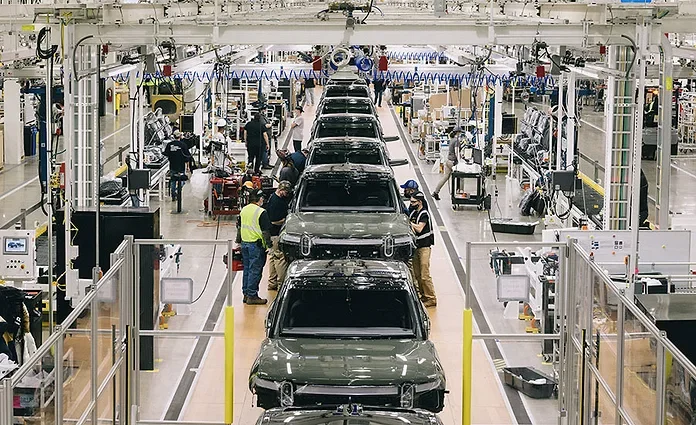
Ontario's automotive and advanced manufacturing sector is shifting fast. Automakers are balancing battery-electric, hybrid and energy-storage programs across Southern Ontario. Their Tier-1 and Tier-2 suppliers, many headquartered in Asia, Europe or the United States, share one operational challenge: turning global factory specifications into a permitted, operating Ontario plant without losing months to local approvals.
At HKC Construction, we help both domestic suppliers and international entrants bridge that gap. You bring the manufacturing know-how and the equipment. We handle the Ontario construction reality, through full Design-Build, Construction Management, or Build-Only contracting.
Quick answer: Setting up a manufacturing plant in Ontario means clearing four approval tracks alongside construction. You need a building permit under the Ontario Building Code, with drawings sealed by Ontario-licensed architects and engineers. You also need municipal site plan or change-of-use approval, Electrical Safety Authority (ESA) acceptance of imported equipment, and TSSA registration of boilers, pressure vessels and gas-fired systems. Request utility capacity early, because power upgrades often set the schedule.
The #1 Delay for Incoming Manufacturers Isn't Concrete. It's Approvals.
Pre-construction code translation and permitting—not steel or concrete—is what slows most incoming automotive and EV supplier builds in the GTA, Hamilton, and Windsor corridor. Overseas blueprints and corporate plant standards rarely line up with Ontario regulations out of the box.
Our pre-construction team steps in early to remove surprises in four areas:
1. Translating global specs to the Ontario Building Code (OBC)
Overseas drawings are usually prepared to Eurocodes, Chinese GB standards, Korean or Japanese codes, or the U.S. International Building Code. In Ontario, the permit set must meet the Ontario Building Code and the CSA standards it references. That covers site-specific snow, wind and seismic loads, steel and concrete design, and fire separations. The drawings must also be sealed by architects and engineers licensed in Ontario. We coordinate that local engineering so your global design intent carries through to a permit-ready Ontario package.
2. Electrical and mechanical approvals (ESA and TSSA)
- Voltage and frequency: North American power runs at 60 Hz, and Canadian plants commonly distribute at 600 V three-phase. Machinery built for 380–415 V or 50 Hz may need step-down transformers, drive changes or replacement motors, so we flag it before equipment ships.
- Equipment approval: Imported machinery and control panels must carry a certification mark recognized in Ontario (such as CSA or cUL) or pass an ESA field evaluation before they can be connected and put into service.
- Pressure equipment and fuel gas: Boilers, pressure vessels and pressure piping need a TSSA-approved design with a Canadian Registration Number (CRN), and gas-fired equipment must meet TSSA fuel-safety requirements under the CSA B149.1 installation code. ASME or CE-stamped equipment isn't automatically accepted.
3. Municipal site plan and change-of-use approvals
Each municipality runs its own process, from Mississauga and Brampton to the Halton Region towns, Waterloo Region and Southwestern Ontario. Approvals matter most when you are adapting an existing building instead of building greenfield, because a new manufacturing use can trigger zoning checks, change-of-use permits and fire-code upgrades.
4. Utility lead times
We identify transformer, hydro capacity and natural gas upgrades months before your equipment leaves port. We also open early conversations with the local electricity distributor (such as Alectra Utilities across much of the GTA or ENWIN Utilities in Windsor) and with Enbridge Gas.
| Area | Overseas plans often assume | Ontario requires |
|---|---|---|
| Building design | Eurocodes, Chinese GB, Korean or Japanese codes, or the U.S. IBC; home-country engineer stamps | Ontario Building Code and referenced CSA standards; drawings sealed by Ontario-licensed architects and engineers |
| Power | 380–415 V, often 50 Hz; IEC or CE-marked panels | 60 Hz, commonly 600 V three-phase; a certification mark recognized in Ontario or an accepted field evaluation |
| Pressure equipment | ASME or CE (PED) stamped vessels and piping | TSSA design registration with a Canadian Registration Number (CRN) |
| Gas-fired equipment | Home-country gas codes | TSSA fuel-safety requirements, the CSA B149.1 installation code, and licensed gas technicians |
| Site and zoning | Industrial park or free-zone approvals | Municipal zoning, site plan approval and building permit; a change-of-use permit for existing buildings |
What Are the Steps to Set Up a Manufacturing Plant in Ontario?
Launching an Ontario manufacturing facility follows seven sequential milestones where utility requests, engineering adaptation, and long-lead procurement must run in parallel:
- Site selection and feasibility: Confirm zoning, power availability, slab and clear height, and site servicing before you sign.
- Utility requests: Apply for hydro and gas capacity early, since upgrades can take many months.
- Design adaptation: Convert global specs into an Ontario-compliant, sealed permit set.
- Approvals: Secure site plan approval where required, then the building permit.
- Long-lead procurement: Order switchgear, transformers, cranes and specialty systems as soon as the design allows.
- Construction and equipment installation: Build the shell or fit-up, then set and connect production equipment.
- Inspections, occupancy and commissioning: Complete municipal, ESA and TSSA sign-offs before the line goes live.
Ground-Up Build or Existing Building: Which Is Faster in Ontario?
Speed to market drives OEM supply contracts, so incoming suppliers usually choose one of two paths. HKC delivers both.
Built to Multinational Safety and Quality Standards
International OEMs and Tier-1 suppliers audit contractor safety before awarding work. HKC Construction holds IHSA COR® 2020 certification, RBQ licensing and recognition under WSIB's Health and Safety Excellence program. We back that with a 98% on-time completion record across more than 2,500 commercial and industrial projects since 2010. Review our safety and COR® certification program when you prequalify your contractor.
Frequently Asked Questions
What approvals do I need to build a manufacturing plant in Ontario?
Most projects need a building permit under the Ontario Building Code, zoning compliance and often site plan approval from the municipality, ESA acceptance of the electrical installation and equipment, and TSSA registration for boilers, pressure vessels and gas-fired equipment. Processes with air emissions may also need an Environmental Compliance Approval from Ontario's Ministry of the Environment, Conservation and Parks. An experienced Ontario general contractor coordinates these in parallel with design.
Can we use our overseas engineering drawings in Ontario?
Not directly. Overseas drawings are a strong starting point, but the permit set must meet the Ontario Building Code and its referenced CSA standards and be sealed by Ontario-licensed architects and engineers. Under design-build or construction management, HKC coordinates that adaptation with your global engineering team.
Will European or Asian production equipment work in an Ontario plant?
Usually, with planning. Ontario power is 60 Hz and plants commonly run 600 V three-phase, so 50 Hz or 400 V equipment may need transformers or motor and drive changes. Imported panels also need a recognized certification mark or a field evaluation, and pressure equipment needs a TSSA-issued Canadian Registration Number (CRN).
Is it faster to lease an existing building or build new?
Converting an existing industrial building is usually faster when its power, clear height and slab can be upgraded economically. A ground-up plant makes more sense when your process needs crane loads, clear heights or hazardous-material separation that an existing shell can't deliver without major rebuilding.
When should an international manufacturer hire an Ontario general contractor?
Before you sign a lease or set equipment shipping dates. Early involvement lets the contractor check power, zoning, slab capacity and approval timelines while you can still change course. If your drawings are already complete, HKC can also step in as your build-only general contractor.
Does HKC Construction work in the Windsor and Southwestern Ontario auto corridor?
Yes. HKC Construction is based in Mississauga and builds industrial projects across the GTA, Hamilton, Waterloo Region and Southwestern Ontario, including Windsor.
Launching or Retooling in Ontario? Let's Talk Early
The best time to bring a general contractor to the table is before you sign a lease or finalize equipment shipping dates. If your architectural team already has drawings complete, we're equally ready to step in as your Build-Only general contractor.
- Send drawings or RFPs for pricing: info@hkcconstruction.com or submit via our Tenders page
- Book a confidential Ontario site and feasibility consultation: (905) 565-1220
HKC Construction · 5715 McAdam Rd, Mississauga, ON L4Z 1N9 · (905) 565-1220
Related reading
- How to Hire a Manufacturing Plant Contractor in Ontario: Design-Build, CM, or Build-Only?
- Converting a Warehouse into a Manufacturing Plant: 6 Upgrades to Check
- Manufacturing Plant Construction in Ontario: Costs, Permits, and Expansion Strategies
- Canadian Auto Manufacturing: Industrial Growth, Supply Chains, and Costs
Launching an Auto, EV, or Tier-1 Supplier Plant in Ontario?
Partner with HKC Construction before you sign a lease or set equipment shipping dates. Let our industrial team review your OBC code translation, ESA & TSSA equipment approvals, and hydro/gas utility lead times.
