.png)
.png)
.png)






A Guide to Sustainable Technology in Commercial Construction
Smarter Buildings, Lower Costs
Skyrocketing energy bills and tightening environmental regulations are the new reality for commercial property owners. With operational costs climbing, traditional building methods are proving to be both expensive and inefficient. Many business owners and facility managers don't realize that the construction industry has pioneered incredible technologies that can slash a building's energy consumption by 40% or more, directly impacting the bottom line. There's a common misconception that these technologies are too expensive or experimental for commercial applications. The truth is, sustainable construction technology is more accessible and financially viable than ever before. The long-term savings on utilities, combined with a growing demand for green-certified spaces, make these upgrades a powerful investment.
Let's explore the sustainable technologies that are revolutionizing how we build commercial spaces and why they are essential for your next project or renovation.
6 Sustainable Technologies Driving Commercial Efficiency Right Now
Before we dive deep, here are the technologies making the biggest financial and environmental impact for commercial properties:
Smart Building Management Systems (BMS) - Can cut building energy costs by up to 30% through automated HVAC and lighting control.
High-Performance Building Envelopes - Advanced insulation and triple-glazed windows can reduce heating and cooling needs by over 50%.
Commercial-Scale Solar Integration - Rooftop solar arrays can offset a significant portion of a building's electricity demand, locking in energy prices.
Low-Carbon Concrete - Reduces the carbon footprint of a building's foundation and structure by 30% or more.
Rainwater Harvesting & Greywater Recycling - Can reduce municipal water consumption for non-potable uses (like irrigation and toilets) by up to 70%.
Building Information Modeling (BIM) - Digital pre-construction planning that reduces material waste by up to 20%.
Now, let's break down exactly how these work and why they're a smart investment.
What Makes a Commercial Building "Sustainable"?
Sustainable construction for commercial properties isn't just about being "green", it's about creating high-performance assets that are cheaper to run, healthier for occupants, and more valuable in the long term. We're talking about office buildings that maintain perfect comfort with minimal energy, warehouses that generate their own power, and retail spaces that significantly cut water usage.
The pillars of sustainability are energy efficiency, innovative materials, and water management. For commercial buildings, energy efficiency takes the lead, as HVAC and lighting can account for over half of a property's total energy consumption.
Energy-Efficient Technologies Leading the Market
Smart Building Systems (BMS): The Brain of the Building
A Building Management System (BMS) is the game-changer for commercial efficiency. It acts as a central nervous system, using sensors to monitor occupancy, temperature, and daylight, then automatically adjusting HVAC and lighting systems. This eliminates energy waste from heating empty wings or lighting unoccupied floors, leading to massive operational savings.
High-Performance Envelopes: Locking in Efficiency
A building's "envelope", its roof, walls, windows, and foundation is its first line of defense against energy loss. Sustainable design focuses on creating an airtight, super-insulated shell through technologies like advanced insulation and high-performance glazing to maintain stable indoor temperatures.
Revolutionary Building Materials
Mass Timber: The Strong, Sustainable Skeleton
Mass timber products like Cross-Laminated Timber (CLT) are revolutionizing commercial structures. These engineered wood panels are as strong as steel but are a fraction of the weight and act as a carbon sink, storing tons of CO2 that would otherwise be in the atmosphere. Mass timber construction is also faster and quieter, minimizing disruption in dense urban areas.
Low-Carbon Concrete: A Greener Foundation
Concrete production is a major source of CO2 emissions. Low-carbon concrete helps solve this by replacing a portion of the cement with recycled industrial byproducts like fly ash and slag. The result is a product that is just as strong and durable but has a significantly smaller environmental footprint.
Water Management Technologies
Green Roofs: More Than Just a Pretty Space
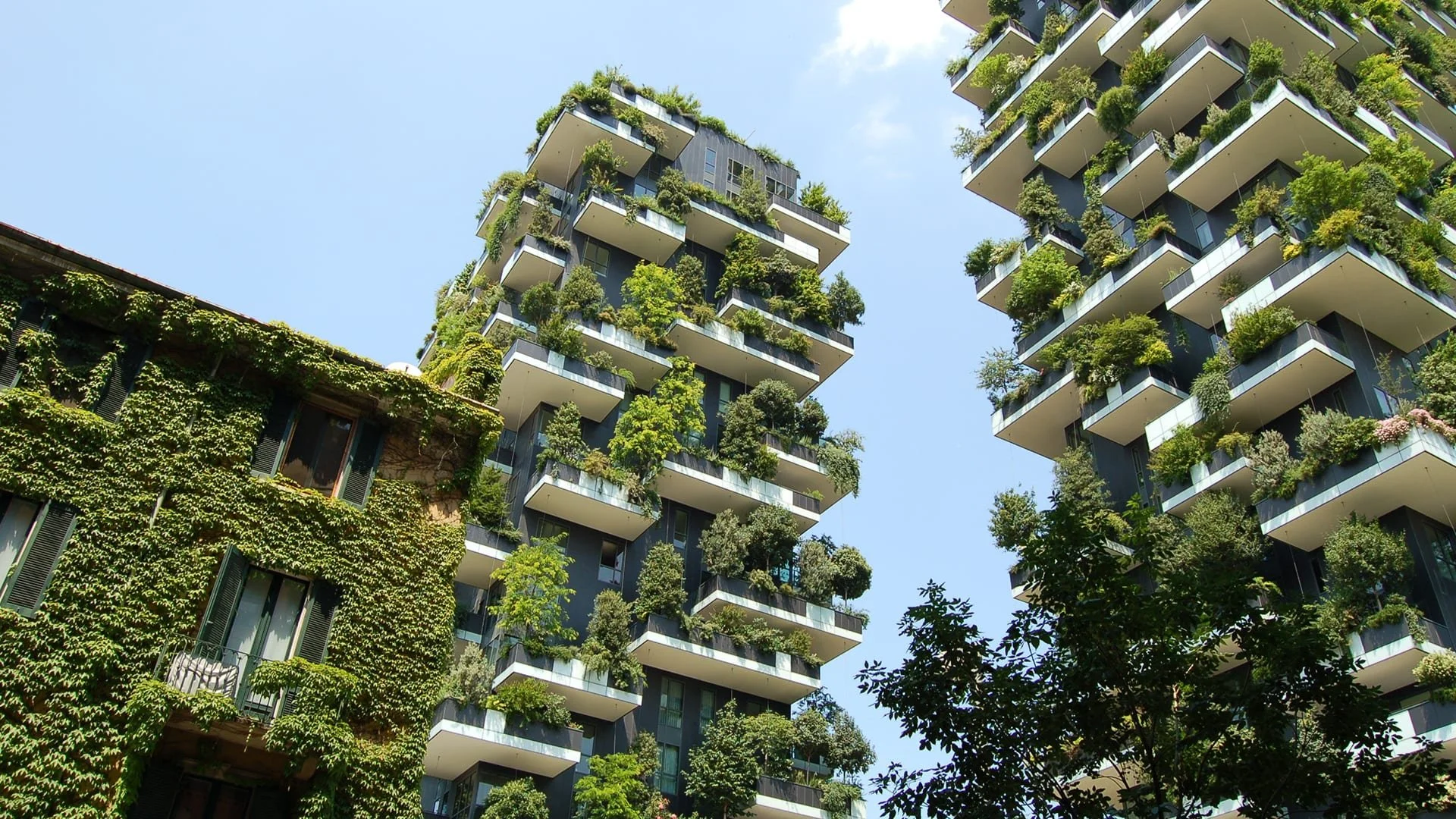
Green, or "living," roofs are increasingly common on commercial buildings for a reason. Covered in vegetation, they absorb rainwater, reducing the strain on storm water systems, a major issue in urban centers. They also provide an extra layer of insulation, lowering HVAC costs and mitigating the urban "heat island" effect.
Water Recycling Systems
Commercial properties are major water consumers. Sustainable designs incorporate systems to reduce this demand:
Rainwater Harvesting: Large commercial roofs can collect thousands of gallons of water, which can be stored and used for landscape irrigation, toilet flushing, or cooling tower make-up water.
Greywater Recycling: Water from sinks and showers can be filtered and reused for the same non-potable purposes, further cutting municipal water bills.
The Digital Blueprint: Smart Construction Integration
Building Information Modeling (BIM)
BIM technology allows architects, engineers, and construction teams to build a project virtually before they build it physically. This detailed 3D model identifies clashes and inefficiencies in the design phase, preventing costly errors and material waste on-site. BIM ensures all sustainable features are perfectly integrated from day one.
Prefabrication and Modular Construction
By building components (like wall panels or entire room pods) in a factory, waste is minimized, quality control is improved, and on-site construction time is dramatically reduced. This "just-in-time" delivery of components leads to safer, cleaner, and more efficient job sites.
The Business Case: What's the ROI?
Upfront Investment
Implementing sustainable technologies can add 2%–10% to the initial construction cost. However, government incentives, tax credits, and green building grants can significantly offset this investment.
Long-Term Savings & Value
This is where sustainable commercial buildings truly shine. A green-certified building can command 5%–10% higher rental rates and enjoy lower vacancy rates. The energy savings alone can lead to a payback period of just 5–10 years on the initial investment. Over the 30+ year lifespan of a commercial building, the total savings on operational costs are enormous. Furthermore, properties with green certifications like LEED or BREEAM have a higher resale value and are more attractive to corporate tenants with ESG (Environmental, Social, and Governance) mandates.
Your Partner in Sustainable Construction
The adoption of sustainable technology is no longer a question of if, but how. Integrating these innovations seamlessly requires expertise, precision, and a partner who understands the long-term value of building green. At HKC Construction, we specialize in bringing these advanced systems and materials to life, ensuring your commercial project is not only compliant and efficient but also a leader in the market. Our commitment is to deliver a high-performance asset that is built for the future and provides lasting value for decades to come. If you’re ready to build a smarter, more efficient, and more profitable future for your next commercial project, connect with our team today. Let’s build the future, sustainably.
