.png)
.png)
.png)






The Complete Guide to Padel Court Construction in Ontario
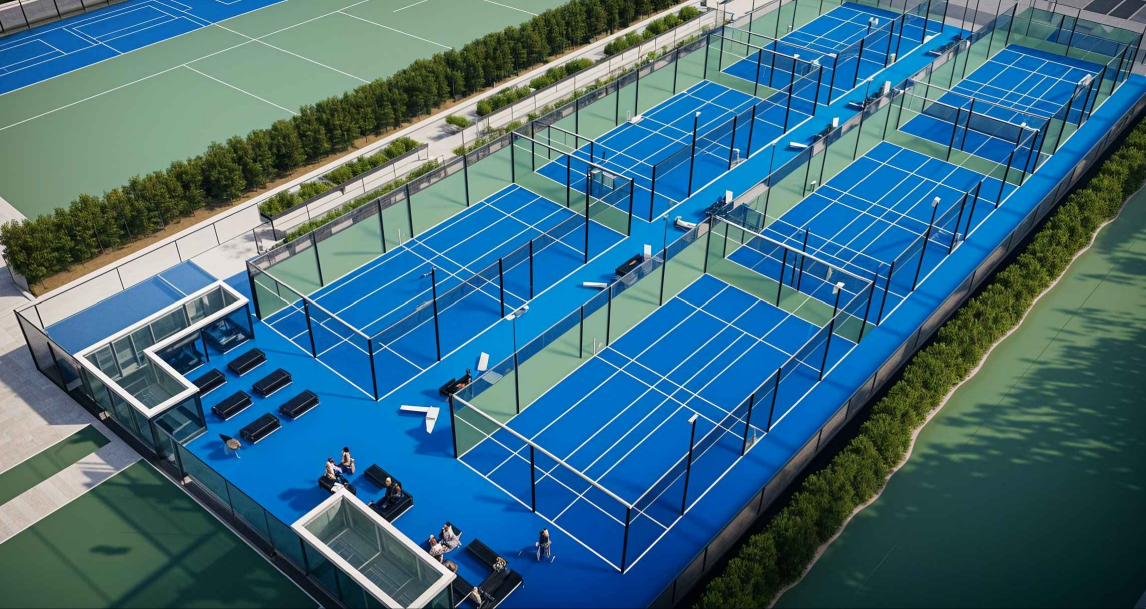
Padel is no longer just "the fastest-growing sport in the world", it has officially arrived in Canada. From the bustling urban centers of Toronto and Vancouver to private estates in Muskoka and the Okanagan, Padel is the ultimate sports infrastructure investment of the decade. However, building a Padel court in the Great White North isn’t as simple as ordering a kit and bolting it to the pavement. Between extreme temperature fluctuations, strict municipal noise bylaws, and rigorous Canadian building codes, the complexity is significant. At HKC Construction, we specialize in navigating these challenges. This is our comprehensive guide to everything you need to know about Padel court construction in Canada for 2025.
1. Financial Forecast: The Real Cost of Building in Canada
In 2025, the all-in cost for a single professional Padel court in Canada ranges from $45,000 to $105,000 CAD. While you might see lower estimates online, those rarely account for the Canadian realities of freight, customs, and high-spec civil engineering required for our soil.
The Realistic Budget Breakdown:
Steel & Glass Structure: $25,000 – $45,000 (Varies by model and glass thickness).
Civil Works (The Foundation): $20,000 – $40,000. In Canada, this includes deep excavation and compacted gravel to prevent frost heave.
Artificial Turf (FIP Standard): $7,000 – $14,000.
LED Lighting (4-6 Post Systems): $4,000 – $10,000.
Logistics & Customs Clearance: $8,000 – $18,000 (Shipping high-grade steel and glass from Europe or overseas).
2. Winter Engineering: Building for the Freeze-Thaw Cycle
This is where most international builds fail in Canada. Our soil is "active." If you pour a standard thin slab, it will crack and shift within two winters, causing your 12mm glass panels to misalign or shatter.
The HKC Construction Specification:
The Mix: We recommend 3,500–4,000 PSI air-entrained concrete. The air-entrainment creates microscopic bubbles that allow water to freeze and expand within the concrete without bursting it.
Thickness: A minimum of 5–6 inches of reinforced concrete is the standard.
The Sub-Base: A 6-inch layer of compacted 3/4" clear stone (gravel) is essential for drainage.
Zinc Priming: For outdoor courts, we use hot-dip galvanization or specialized zinc primers. Without this, the humidity and road salt from Canadian winters will cause structural rust within years.
3. The "Noise Factor": Zoning & Municipal Bylaws
As we’ve seen with the recent "Pickleball noise wars" in Toronto and Vancouver, sound is the #1 hurdle for municipal permits. The "pop" of a Padel ball hitting a racquet is a higher frequency than tennis.
How HKC Navigates This:
Setback Distances: Many Canadian municipalities now suggest a 100-meter buffer from the nearest residential building.
Acoustic Fencing: We can install 4-meter-high acoustic barriers or U-shaped sound-absorbing walls to mitigate noise by up to 15-20 decibels.
Acoustic Studies: For commercial projects, we recommend a pre-build acoustic survey to ensure compliance with local bylaws (like Toronto’s Chapter 591).
4. Choosing Your Court Model: The JUBO Padel Lineup
Through our expertise, we offer several tiers of court models, each serving a specific aesthetic and functional purpose:
The Vision (Standard): Our most robust model. It uses a traditional pillar-and-frame system, offering the highest stability against wind loads (crucial for the Prairies and coastal regions).
The Panoramic (Pro-Grade): Featuring no middle pillars on the back glass, this is the gold standard for clubs hosting tournaments. It offers superior visibility for spectators and cameras.
The Infinity (Luxury): A full-glass viewing experience with no corner pillars. This is the "Ferrari" of Padel courts, often chosen for high-end residential estates or flagship clubs.
5. Compliance & Accessibility (AODA / Building Codes)
If you are building a commercial facility, you must comply with provincial accessibility laws, such as the Accessibility for Ontarians with Disabilities Act (AODA) or the BC Building Code.
Entrances: Gates must have a clear opening of at least 850mm to 1000mm to accommodate sport wheelchairs.
Surface Safety: The transition from the clubhouse to the court must be ramped (max 1:12 slope) with no lips or trip hazards.
Emergency Egress: Commercial courts require clearly marked emergency exit paths that are accessible to all players.
6. The Construction Roadmap
How long does it take? From your first call to the first "bandeja":
Permit & Design Phase (4–12 weeks): Zoning checks, site plans, and municipal approvals.
Civil Engineering (2–3 weeks): Excavation, gravel base, and pouring the reinforced slab.
The Curing Period (28 days): Concrete must fully cure to reach its design strength before we anchor the heavy steel structure.
The Installation Phase (1 week): Our specialized crew assembles the steel, cranes the glass panels into place, and installs the turf with precision-grade sand.
7. ROI: The Business of Padel in Canada
For club owners, the business case for Padel is undeniable. A standard Padel court occupies about 1/3 the space of a tennis court but generates significantly higher revenue per square foot.
Utilization: A well-managed Canadian club can see 35–50% utilization (40+ hours/week).
Revenue Streams: Beyond court rentals (40–100/hour), revenue is driven by coaching clinics, pro-shop sales (racquets and balls), and food/beverage.
Payback Period: Most successful facilities see a complete return on investment (ROI) within 2 to 3 years.
Why Partner with HKC Construction?
Building a Padel facility is a high-stakes construction project. You aren't just building a court; you're building a structural system that must remain safe and level under the weight of 3.6 tons of glass and the stress of Canadian winters.
At HKC Construction, we bridge the gap between European sport design and Canadian engineering standards. We handle the logistics, the concrete, the permits, and the installation giving you a turnkey solution.
Ready to Break Ground?
Contact HKC Construction today for a professional site evaluation and a detailed, line-item quote for your 2025 Padel project.
Start Your Padel Court Project Today
From private residential courts to world-class commercial facilities, our team specializes in turnkey Padel solutions engineered for the Canadian climate. Contact us to discuss your site requirements, zoning, and project estimates.
