.png)
.png)
.png)






Indoor Sports Facility Construction Costs
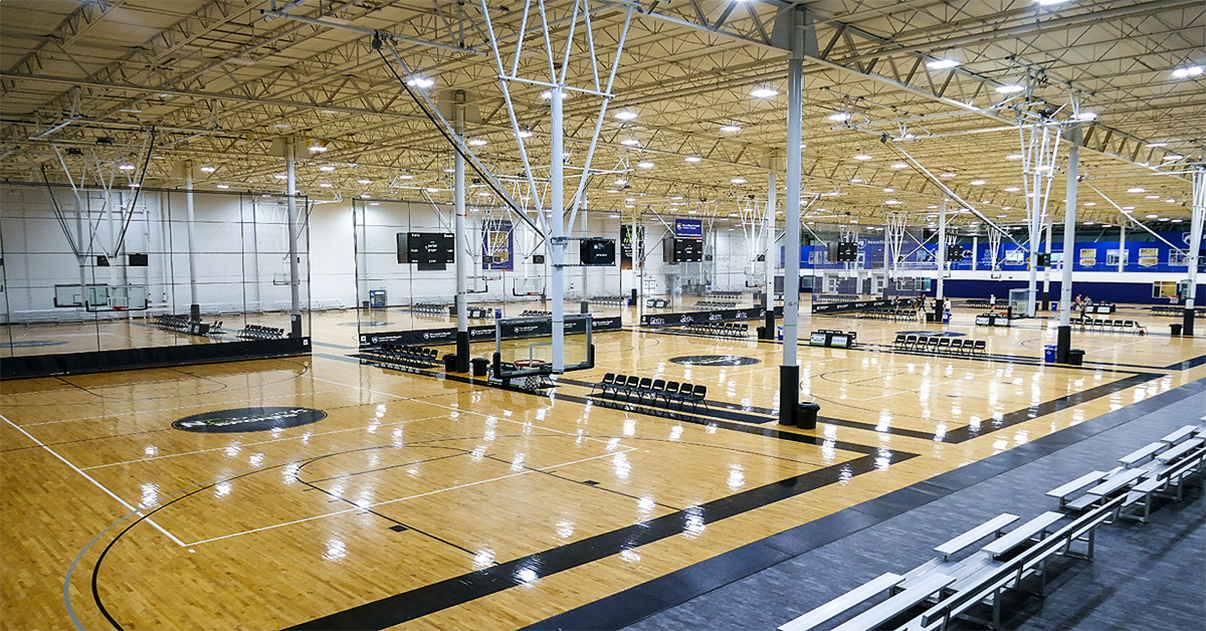
When you envision a new indoor sports facility, you likely see the finished product: the roar of the crowd, athletes training on pristine turf, or the community gathering for a tournament. But for developers, municipalities, and investors, the vision must eventually meet the spreadsheet. The most common question we receive at HKC Construction is: "How much will this cost?"
The answer is rarely a single number. Construction costs are a complex ecosystem of location, materials, and long-term operational planning. In this guide, we break down the financial landscape of building an indoor sports facility in Canada, helping you move from concept to concrete.
The Pre-Construction Checklist
Before you break ground, you must break down the numbers. A successful build starts with feasibility. If you are in the planning phase, this checklist is your roadmap.
1. Financing & Capital Strategy
Building a sports complex is capital-intensive. You need a robust financial model before an architect draws a single line.
The Insight: Don't rely on a single funding source. Successful projects often blend private equity, commercial loans, and crucially for this sector government grants. Many sports facilities qualify for community infrastructure grants or non-profit funding. Research this early.
2. Regulatory Compliance
Sports facilities face stricter codes than standard warehouses.
The Insight: In a post-2020 world, health and safety regulations have evolved. You must account for enhanced ventilation systems (HVAC) and spacing requirements. In Ontario, adherence to AODA (Accessibility for Ontarians with Disabilities Act) is not optional; it is a core design requirement that impacts your budget.
3. Realistic Timelines
Time is money.
The Insight: A standard facility can take 18 to 36 months from concept to completion. However, utilizing a Design-Build approach where HKC Construction manages both design and build phases can overlap these timelines, preventing the "blame game" between architects and contractors and saving months of overhead costs.
4. Operational Forecasting
The construction cost is just the down payment; the operational cost is the mortgage.
The Insight: When budgeting, consider the "Total Cost of Ownership." A cheaper initial build with poor insulation will cost you double in heating bills over ten years. We always recommend analyzing the long-term ROI of energy-efficient lighting and high-grade insulation.
The 10 Factors That Drive Construction Costs
Why does one facility cost $2M and another $10M? It usually comes down to these ten variables:
Location & Logistics: Building in an urban core increases land and labor costs, whereas rural builds may incur higher costs for bringing utilities (water/sewer) to the site.
Facility Size: While larger buildings cost more overall, the cost per square foot often decreases as the size increases due to economies of scale.
Design Complexity: A pre-engineered steel building is cost-efficient. A custom architectural design with curved glass, mezzanines, and cantilevers will significantly raise the price.
Material Selection: The difference between standard concrete flooring and FIFA-grade turf or FIBA-certified hardwood is substantial.
Facility Type: A "dry" facility (soccer, basketball) is much cheaper than a "wet" facility (pools) or a "cold" facility (ice rinks) due to the mechanical systems required.
Infrastructure: If your land is not serviced, bringing heavy-duty power (required for stadium lighting) and water to the site can be a hidden six-figure cost.
Permitting & Soft Costs: Never underestimate the cost of architects, engineers, environmental assessments, and zoning variances.
Labor Market: Costs fluctuate based on the availability of skilled trades in your specific region.
Commodity Pricing: The price of steel, lumber, and concrete fluctuates globally. A quote from six months ago may no longer be valid today.
Accessibility: Parking lots, turning lanes for buses, and accessible pathways add to the civil work required outside the building footprint.
The Structure Dome vs. Rigid Enclosure
One of the most critical decisions affecting your budget is the type of structure you choose.
Option A: The Seasonal/Air-Supported Dome
Pros: Lower initial construction cost; flexible (can be taken down).
Cons: Higher energy costs (must stay pressurized); shorter lifespan; susceptible to severe weather damage.
Option B: The Fully Enclosed Steel Structure
Pros: Permanent asset that appreciates in value; highly secure; energy-efficient; allows for complex amenities (locker rooms, spectator stands, restaurants).
Cons: Higher upfront capital investment.
Our Advice: If you are building for a permanent community legacy, a rigid steel structure offers a better return on investment over a 20-year period.
The Numbers
What does the market look like right now?
Construction costs are generally calculated by Square Foot (Sq. Ft.). While a basic warehouse-style shell for indoor soccer might range from $100 to $300 per sq. ft., specialized facilities cost significantly more due to the mechanical and finishing requirements.
Based on recent data for institutional and high-quality recreational buildings, here are the estimated ranges:
Specialized Facility Construction Costs
| Building Type | Cost Range (Per Sq. Ft.) |
|---|---|
| Ice Arena | $355 – $450 |
| Community Aquatic Facility | $610 – $940 |
| Multi-Use Recreational Centre | $670 – $1,160 |
| Performing Arts Building | $940 – $1,270 |
| Museum / Gallery | $610 – $905 |
A Practical Example
Let’s look at a standard, private multi-sport fieldhouse (a "dry" facility without ice or pools). If we assume a mid-range market price of $200 per sq. ft. for the shell and basic fit-out:
Project Size: 10,000 Square Feet
Calculation: 10,000 sq. ft. x $200
Estimated Build Cost: $2,000,000
Note: This estimate typically covers the building envelope and basics. It excludes land acquisition, specialized sports equipment, and complex site preparation.
Final Thoughts: Building with Confidence
The ranges provided above are just that ranges. The difference between the low end and the high end depends on who is managing your project. To build a profitable, durable facility, you need more than an online calculator; you need a partner who understands the nuances of commercial construction. You need a team that knows how to source materials efficiently, navigate local zoning laws, and engineer value into every square foot.
HKC Construction is that partner. We help you navigate the complexity of cost to deliver a facility that meets your vision and your budget.
Are you ready to discuss your project?
Contact HKC Construction today for a professional consultation and a detailed estimate.
Build Your Indoor Sports Facility
From multi-sport field houses to ice arenas and aquatic centers, our team specializes in turnkey construction solutions engineered for the Canadian climate. Contact us to discuss feasibility, budgeting, and design-build options.
