.png)
.png)
.png)






Top 10 Megaprojects to Watch in 2026: Ontario’s $100B+ Transformation
Cathedrals of Tomorrow
Inside Ontario's Ten Colossal Mega Projects of 2026
_____________________________________________
A Creative Chronicle of Steel, Stone, Atoms & Asphalt
| [ RANK ] | [ MEGAPROJECT IDENTIFIER ] | [ CAPITAL EXPENDITURE ] |
|---|---|---|
| #01 | THE ONTARIO LINE | CA$34 BILLION |
| #02 | HIGHWAY 413 | CA$16–$18 BILLION |
| #03 | BRUCE POWER COMPONENT REPLACEMENT | CA$13 BILLION |
| #04 | DARLINGTON NUCLEAR REFURBISHMENT | CA$12.8 BILLION |
| #05 | EGLINTON CROSSTOWN LRT (LINE 5) | CA$13 BILLION |
| #06 | SCARBOROUGH SUBWAY EXTENSION | CA$10.2 BILLION |
| #07 | YONGE NORTH SUBWAY EXTENSION | ~CA$5.6 BILLION |
| #08 | EGLINTON CROSSTOWN WEST EXTENSION | CA$4.7 BILLION |
| #09 | ACCELERATED HIGH-SPEED INTERNET | CA$4.0 BILLION |
| #10 | SOUTH NIAGARA HOSPITAL | CA$3.6 BILLION |
Prologue: A Province Beneath the Cranes
Stand for a moment on the Bloor Street Viaduct at dusk and look east, where the Don Valley dissolves into a haze of orange halogen and the silhouettes of tower cranes. Somewhere far below your feet, in the cool blue dark forty metres down, a machine named Libby is grinding her way through glacial clay, her cutterhead studded with tungsten teeth spinning at the pace of a slow heartbeat. She is one half of a twin pair of tunnel boring machines that, in April 2026, began carving the spine of what will become the most expensive single transit project in Canadian history. Above ground, the city hums with the ordinary noises of dinner being made and streetcars bell-ringing their displeasure at traffic. Below ground, an entire hidden geography is being invented in real time.
Libby is not alone. From the uranium-grey shoreline of Lake Huron, where a second reactor has just been coaxed back to life seven months ahead of schedule, to the wind-scoured muskeg of the Ring of Fire, where geologists whisper the names of minerals the world's electric vehicles are starving for, Ontario in 2026 is a province that has decided, with remarkable unanimity across political lines, to build. To build big. To build now. The cumulative value of the major infrastructure works underway or recently completed in this single province this year exceeds one hundred and fifteen billion dollars a figure that would have seemed fantastical a decade ago, and that now reads almost like a routine line item in a budget speech.
This is a chronicle of ten of those projects. They are not the only ones, and arguably not even the only ten worth telling, but they are the largest, the loudest, the most consequential the ones whose shadows will fall across the lives of Ontarians for the next half-century. They are ranked here, as the reader has requested, by sheer audacity of cost: from the thirty-four billion dollar leviathan burrowing beneath Toronto's downtown, down to a three-and-a-half billion dollar hospital rising in a Niagara cornfield. Each is a story of engineering, yes, but also of politics and patience, of contracts and cost overruns, of first-ball promises and fourth-quarter panic. Each is, in its own way, a wager on what this province wants to become.
“Ontario is cementing our position as a tier-one nuclear jurisdiction with a plan to put 150,000 Canadians to work, with ‘Made in Canada’ stamped on over 90 per cent of our spend.”
Chapter I: The Ten Colossal
What follows is a descent through the pantheon, ordered from the most expensive to the merely enormous. Each entry offers the vital statistics cost, scope, timeline followed by a narrative that tries, as honestly as the available sources allow, to capture what is being built and why it matters. Numbers are drawn from provincial government releases, Metrolinx filings, Infrastructure Ontario market updates, and peer-reviewed reporting current to mid-2026; full citations appear in the References section.
1. The Ontario Line: Toronto's Underground Leviathan
$34 Billion | 15.6 km | 15 Stations | Completion: Early 2030s (2032)
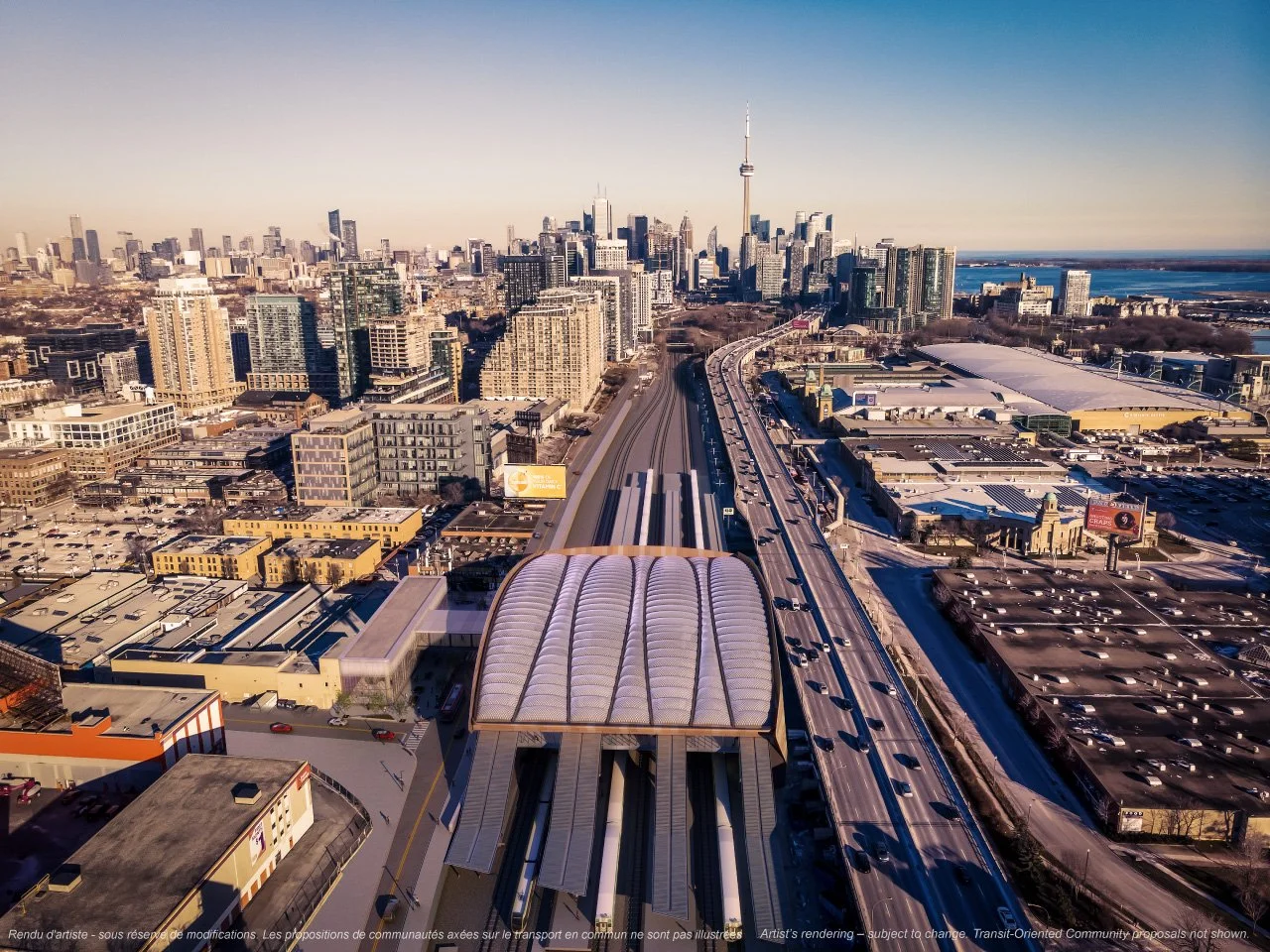
Begin where the money is. The Ontario Line is, by a comfortable margin, the single most expensive infrastructure project currently underway anywhere in Canada a fifteen-and-a-half kilometre crescent of subway that will someday arc from Exhibition Place on the western waterfront, through the dense verticality of downtown, across the Lower Don River on a new bridge, and north to meet the freshly opened Eglinton Crosstown at Don Mills. When the Government of Ontario first announced the line in April 2019, it carried a price tag of $10.9 billion and a promised opening date of 2027. By August 2026, the official estimate had climbed to thirty-four billion dollars more than triple with completion pushed to 2032 and Metrolinx executives openly declining to commit to a firm opening date at all.
What does thirty-four billion dollars buy? It buys fifteen stations, more than forty connections to other transit lines, and a line that will bring nearly a quarter of a million additional people within walking distance of rapid transit. It buys twin tunnels bored through some of the most geotechnically complicated urban ground on the continent soil that alternates between glacial till, buried river channels, and the archaeological remnants of nineteenth-century Toronto. It buys the Lower Don Bridge, an above-ground crossing whose design had to accommodate not only trains but the migratory patterns of local birdlife and the flood projections of a warming climate. And it buys, perhaps most controversially, the temporary shutdown of parts of the Don Valley Parkway to construct the bridges the line requires a possibility acknowledged by Metrolinx CEO Michael Lindsay in February 2026 with the kind of carefully calibrated language that signals trouble ahead.
Ground was broken in March 2022, but 2026 was the year the project truly came alive underground. On April 20, two tunnel boring machines christened Libby and Corky, in a nod to local history began chewing their way east from Exhibition Station toward the Don Yard, descending as deep as forty metres below the surface. Above ground, excavation was already complete at three downtown stations: King-Bathurst, Moss Park, and the Distillery District. The Ontario Line is, in the language of engineers, a 'legacy project' a phrase that Transportation Minister Prabmeet Sarkaria has used deliberately in defending its spiralling cost. The wager is that a city of Toronto's growing density cannot survive another generation without a second downtown relief line. The wager, in other words, is that thirty-four billion dollars is in fact cheap at the price.
| Vital Statistics | Details |
|---|---|
| Estimated Cost | CA$34 billion (originally $10.9B in 2019) |
| Length | 15.6 kilometres (9.7 mi) |
| Stations | 15, with 40+ transit connections |
| Timeline | Tunnelling began April 2026; completion est. 2032 |
| Daily Ridership (proj.) | ~388,000 by 2041 |
| Owner / Delivery | Metrolinx / Infrastructure Ontario (P3) |
| Federal Contribution | Part of $10.4B federal transit investment in Toronto |
2. Highway 413: The Concrete Serpent Through the Greenbelt
$16–$18 Billion (est.) | 59 km | Completion: ~2033 | Status: Early Construction
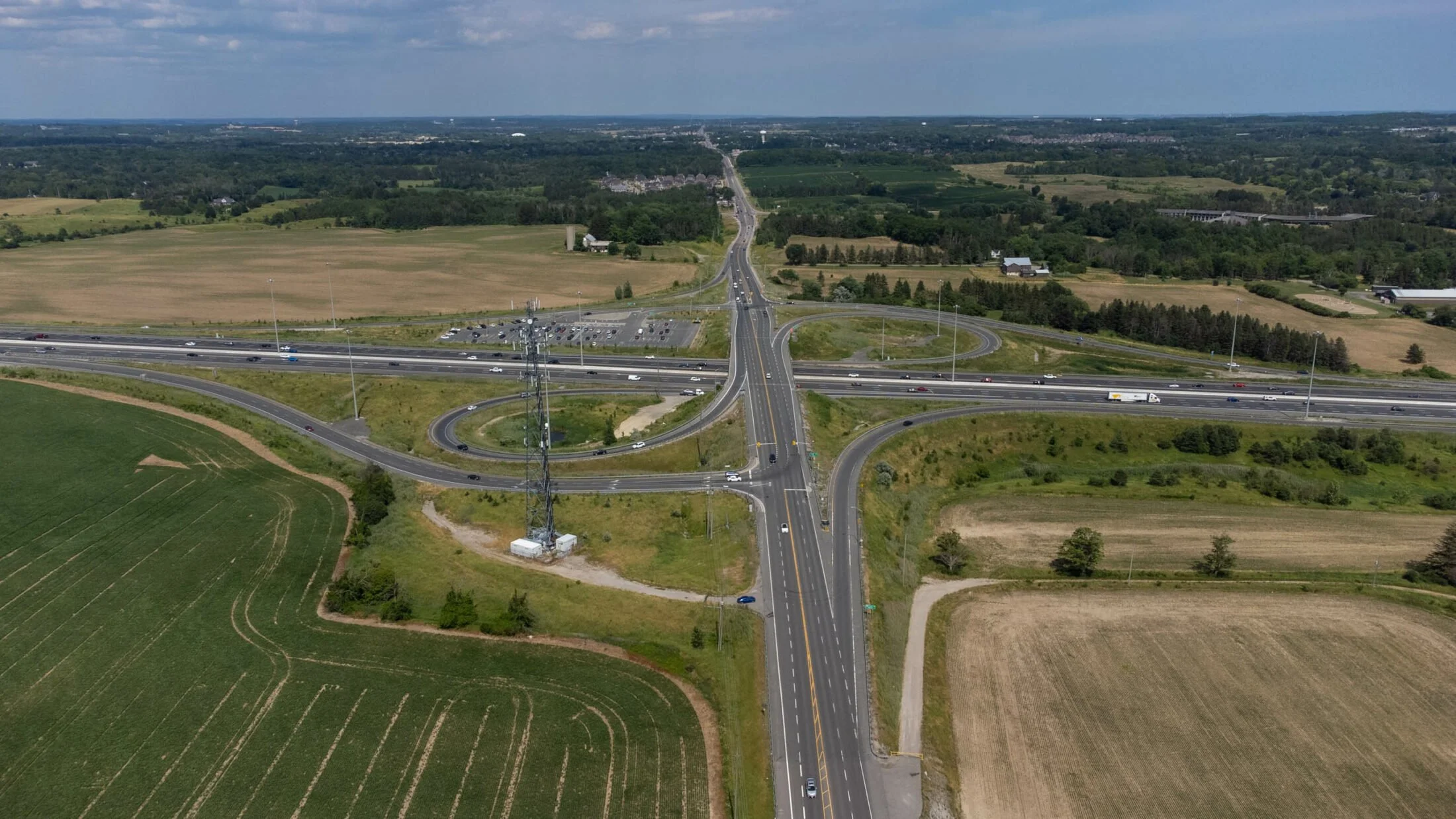
If the Ontario Line is the project Ontarians love to complain about, Highway 413 is the project they fight about. The proposed fifty-nine kilometre freeway sweeping in a wide arc through Peel and York Regions, linking Highway 401 near Milton to Highway 400 in Vaughan has become the single most polarizing piece of infrastructure in the province, a fault line along which entire political identities are now defined. The Ford government's own estimates have been notably cagey, but the advocacy group Environmental Defence and a coalition of opposition parties have, as of June 2026, formally requested the Financial Accountability Officer to investigate what they describe as a 'costliest mega-highway' whose true price could reach eighteen billion dollars.
What makes Highway 413 so expensive is not just asphalt. It is the cost of land acquisition in some of Canada's most expensive exurban real estate, the cost of bridging the rivers and ravines of the Credit and Humber watersheds, and the cost of building the kind of twenty-first century border infrastructure including a potential new international crossing corridor that the highway is meant to anchor. The highway will feature eleven interchanges and, in the government's framing, will relieve the chronic congestion that chokes the western GTA. Critics counter that the highway will pave over protected Greenbelt land and prime farmland, fuel sprawl, and ultimately induce more demand than it relieves a phenomenon transportation economists know as 'induced traffic,' and which has documented itself repeatedly in the literature on North American freeway expansion.
The political history is labyrinthine. In November 2024, the Ford government passed Bill 212 the provocatively titled Reducing Gridlock, Saving You Time Act which exempted Highway 413 from the provincial Environmental Assessment Act, removing what would have been the most rigorous public scrutiny of the route. Construction, Premier Ford has promised, will start in 2027. Whether that timeline survives the inevitable court challenges from First Nations, environmental groups, and municipalities opposed to the route remains, as of mid-2026, an open question. What is certain is that Highway 413 at sixteen to eighteen billion dollars, give or take a courthouse is the second largest infrastructure commitment currently on the provincial books.
| Vital Statistics | Details |
|---|---|
| Estimated Cost | CA$16–18 billion (Environmental Defence estimate) |
| Length | 59 km of new freeway (52 km mainline + connections) |
| Interchanges | 11 planned |
| Route | Highway 401 (Milton) to Highway 400 (Vaughan) |
| Status | Land acquisition & early works; construction targeted 2027 |
| Controversy | Exempted from Environmental Assessment via Bill 212 (2024) |
| Federal Review | FAO asked to conduct full-cost analysis (June 2026) |
3. Bruce Power Major Component Replacement: The Atom Tenders
$13 Billion (program-wide) | Units 3–8 | Completion: 2033 | Status: Ongoing
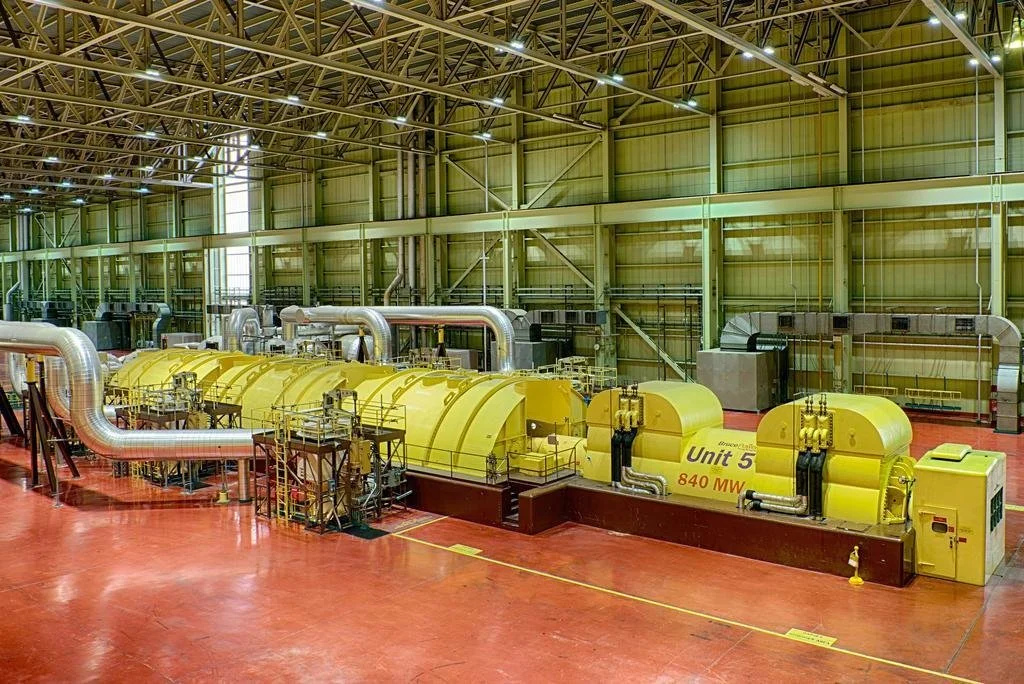
Drive three hours northwest of Toronto, past the ski hills of Blue Mountain and the apple orchards of Georgian Bay, and the landscape flattens into the low grey scrubbiness of the Bruce Peninsula. Here, on the shore of Lake Huron, sits the largest operating nuclear generating station in the world by output eight CANDU reactors capable of producing more than six thousand megawatts of electricity, enough to power roughly a third of Ontario's homes. The Major Component Replacement, or MCR, project is the thirteen-year, thirteen-billion-dollar surgical procedure by which Bruce Power intends to extend the lives of six of those reactors Units 3 through 8 by an additional thirty years, securing low-carbon baseload power for the province until 2064.
The MCR is not a single construction event but a carefully choreographed sequence: each unit is taken offline in turn, defuelled, opened up, and subjected to the replacement of its steam generators, pressure tubes, calandria tubes, and feeder tubes the(ir) deep internal organs — before being reassembled, tested, and returned to service. The work began in January 2020 with Unit 6 and proceeds unit by unit through 2033. In June 2026, the project notched what the provincial government called 'the most successful completion and return to service of a nuclear unit in Ontario history' when Unit 3 was returned to the grid seven months ahead of schedule and a hundred and fifty million dollars under budget, providing more than eight hundred megawatts of clean power enough for nearly eight hundred thousand homes.
The economic ripple effects of the MCR are difficult to overstate. Bruce Power estimates that the program secures roughly twenty-two thousand jobs directly and indirectly from operations, plus another five thousand annually throughout the investment program. Approximately sixty supplier partners have opened offices or manufacturing facilities in Bruce, Grey, and Huron counties since 2016, transforming a region once known chiefly for tourism and agriculture into what local officials now describe, with only slight exaggeration, as a 'nuclear energy-inspired economic hub.' Over ninety per cent of the project's spend is stamped, in the minister's phrase, 'Made in Canada.' And looming behind the MCR is an even larger ambition: a proposed entirely new 4,800 megawatt nuclear station at the Bruce site, with three hundred million dollars already committed to planning and a target completion date of 2030 for that planning phase.
| Vital Statistics | Details |
|---|---|
| Estimated Cost | CA$13 billion (program-wide, all six units) |
| Scope | Refurbishment of Units 3–8 at Bruce Nuclear Generating Station |
| Duration | January 2020 – 2033 (13 years) |
| Unit 3 Milestone | Returned to service June 2026, 7 months ahead of schedule |
| Unit 3 Output | 800+ MW enough for ~800,000 homes |
| Jobs Supported | ~22,000 direct/indirect; 5,000 annually during investment |
| Life Extension | Adds 30 years power secured until 2064 |
4. Darlington Refurbishment: The Heart Restart
$12.8 Billion | 4 Reactor Units | Completed: February 2026 (Ahead of Schedule)
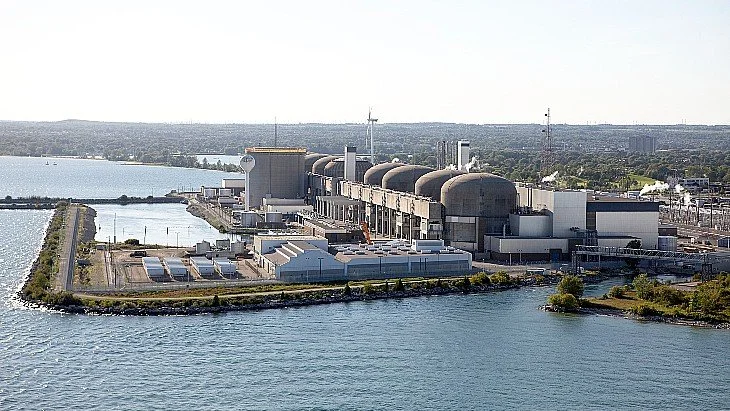
If Bruce Power's MCR is a marathon, the Darlington Refurbishment is the sprint that finished first. Ontario Power Generation's decade-long, twelve-point-eight-billion-dollar overhaul of four CANDU reactors in Clarington, east of Toronto, reached its formal conclusion on February 2, 2026 four months ahead of schedule and a hundred and fifty million dollars under budget. The completion of Unit 4 that month marked the end of what the province has called 'the world's largest nuclear refurbishment project to date,' a ten-year campaign that began with thorough planning, consumed another nine years of careful execution, and required millions of worker-hours across thousands of skilled tradespeople.
What makes Darlington's completion genuinely remarkable, in a sector notorious for overruns, is that it landed on the right side of both schedule and budget a result that the nuclear industry's international observers have been quick to celebrate as proof that large, complex, public-interest engineering projects can still be delivered competently. Each of the four 878-megawatt reactors, all of which entered commercial operation in the early 1990s, has now been defuelled, opened, rebuilt with new pressure tubes and steam generators, and returned to service. The Canadian Nuclear Safety Commission approved the final unit's return to initial power testing in February 2026, and full power followed shortly thereafter. The economic projections are stunning: thirty years of continued operation are expected to generate up to ninety billion dollars in economic benefits for Ontario, support roughly fourteen thousand two hundred jobs, and produce enough clean electricity to power three and a half million homes.
Darlington matters, too, as a proof of concept. The history of nuclear refurbishment in North America is littered with cautionary tales projects that ran multiples over budget, in some cases bankrupted their owners, and soured entire jurisdictions on the technology for a generation. Darlington's clean execution has been cited, in provincial and federal energy planning documents alike, as the empirical basis for Ontario's broader nuclear ambitions: not only the ongoing Bruce MCR, but the proposed new Bruce station, the planned refurbishment of Pickering, and exploratory work on small modular reactors. The lesson the province has chosen to draw is that disciplined project execution, rather than technological pessimism, is the binding constraint on the next half-century of clean electricity.
| Vital Statistics | Details |
|---|---|
| Final Cost | CA$12.8 billion ($150M under budget) |
| Scope | Refurbishment of all four 878-MWe CANDU reactors |
| Timeline | Planning began ~2012; construction 2016–February 2026 |
| Completion | February 2, 2026 four months ahead of schedule |
| 30-Year Economic Benefit | Up to $90 billion for Ontario |
| Jobs Supported | ~14,200 over the operating life |
| Homes Powered | ~3.5 million |
5. Eglinton Crosstown LRT: The Midtown Artery That Finally Breathed
$13 Billion | 25 Stations | 19 km | Opened: February 8, 2026
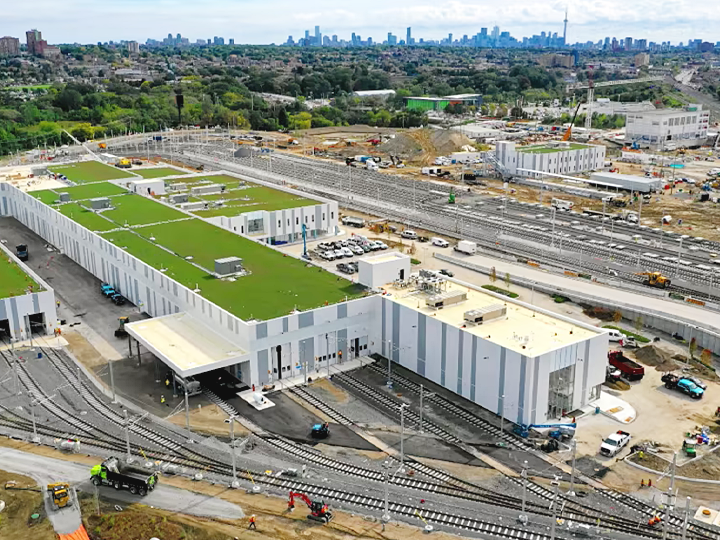
Of all the projects chronicled here, none carries a longer scar tissue of frustration than Eglinton Crosstown. The thirteen-billion-dollar light rail line, which slices nineteen kilometres across midtown Toronto from Mount Dennis in the west to Kennedy in the east, finally opened to passengers on February 8, 2026 six years late, roughly a billion dollars over budget, and after a saga of litigation, pandemic disruption, and community angst that has become required reading in every Canadian urban planning program. Free rides were offered on opening day as a small gesture of apology; the public, by most accounts, accepted them graciously and then boarded the trains with something closer to relief than celebration.
The Crosstown was conceived as a single Design-Build-Finance-Maintain contract under Infrastructure Ontario's P3 model, with Metrolinx as owner and a consortium of private partners responsible for delivery. The model, which had worked tolerably well on earlier projects, foundered on Eglinton in a perfect storm of unforeseen utility conflicts, design changes mid-construction, the COVID-19 shutdown of 2020, and a notoriously adversarial relationship between Metrolinx and the constructor Crosslinx. By the time trains began running, calls for a public inquiry had been repeatedly rejected by Premier Ford, and the provincial Auditor General had been petitioned to investigate. Transport Action Ontario, a respected advocacy group, has argued that a thorough review of the project could reveal improvements in how future Infrastructure Ontario contracts are structured a modest, bureaucratic lesson drawn from an immodest, thirteen-billion-dollar education.
And yet, for all that, the trains run. The line has twenty-five stations, interchanges with three subway lines and dozens of bus routes, and a fleet of Flexity Freedom low-floor light rail vehicles housed at a purpose-built maintenance facility at Black Creek. The Crosstown is expected to carry more than a hundred thousand riders a day in its early years, rising substantially as the corridor densifies. The western extension another 9.2 kilometres, seven stations, $4.7 billion, profiled below as a separate project will push the line all the way into Mississauga's Square One by 2031. The Crosstown, in other words, is the cautionary tale that nonetheless delivered. It is also the project against which every other transit delivery in the province will be measured, for better and for worse, for a generation.
| Vital Statistics | Details |
|---|---|
| Final Cost | CA$13 billion (~$1B over original estimate) |
| Length | 19 km, 25 stations |
| Opening | February 8, 2026 (6 years late) |
| Operator | Toronto Transit Commission (under Metrolinx ownership) |
| Rolling Stock | Flexity Freedom low-floor LRVs |
| Delivery Model | Design-Build-Finance-Maintain (P3) |
| Daily Ridership (proj.) | 100,000+ |
6. Scarborough Subway Extension: The Promise Reforged
$10.2 Billion | 7.8 km | 3 Stations | Completion: ~2030
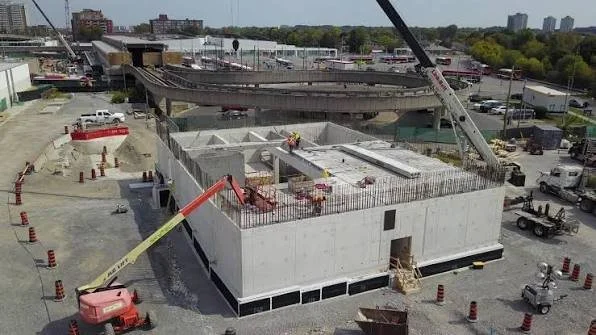
The Scarborough Subway Extension is, more than any other project on this list, a story of political redemption. Scarborough that vast, proud, suburban eastern limb of Toronto has waited decades for the dignity of a subway, watching as the ageing Scarborough RT, an experimental elevated line that opened in 1985, lurched toward its ignominious permanent closure after a derailment in July 2023. The seven-point-eight kilometre extension of Line 2 Bloor-Danforth from Kennedy Station northeast to McCowan Road and Sheppard Avenue, with three new stations, is the province's answer to that long hunger. It is also, at $10.2 billion as of mid-2025, nearly double the figure originally announced in 2019.
Construction has been underway since 2021 and is being delivered in two major contracts: the Advance Tunnel project, which has already seen a tunnel boring machine carve the line's bore, and the Stations, Rail and Systems package, which is now in active procurement. The three stations Lawrence-McCowan, Scarborough Centre, and McCowan-Sheppard will anchor a corridor that the province expects to serve as the spine of a broader Scarborough redevelopment. The provincial government has committed to bearing all construction costs, a remarkable political concession that reflects both the depth of Scarborough's grievance and the political salience of the project to the governing party's electoral coalition.
The cost trajectory has been the source of significant controversy. By 2022, once contracts had been awarded, the estimate had risen to between seventeen and nineteen billion dollars for the broader subway program; individual project figures were subsequently refined downward as scope and delivery contracts crystallized, with the Scarborough-specific estimate settling at $10.2 billion in June 2025 roughly $1.3 billion per kilometre, a figure that places it among the most expensive subways, on a per-kilometre basis, anywhere in the world. Premier Ford's response to the cost escalation was characteristically blunt: 'We have to build.' Whether the line opens by its current 2030 target or slips, like so many of its siblings, into the next decade will depend on factors that no amount of political will can fully control.
| Vital Statistics | Details |
|---|---|
| Estimated Cost | CA$10.2 billion (nearly double the 2019 estimate) |
| Length | 7.8 km extension of Line 2 |
| Stations | 3 new (Lawrence, Scarborough Centre, McCowan-Sheppard) |
| Construction Start | 2021 (advance tunnel); stations & systems in procurement |
| Target Opening | 2030 |
| Federal Contribution | $2.25+ billion |
| Cost per km | ~$1.3 billion/km |
7. Yonge North Subway Extension: The Northern Push
$5.6 Billion (est.) | ~8 km | 5 Stations | Completion: Early 2030s
Where the Scarborough extension reaches east, the Yonge North Subway Extension reaches north carrying TTC Line 1 roughly eight kilometres beyond Finch Station, across the municipal boundary into York Region for the first time, with stops in Markham and Richmond Hill. The project, estimated at around $5.6 billion, will serve an estimated ninety-four thousand riders daily once open, connecting one of the fastest-growing regions of the Greater Toronto Area to the existing subway network and, via a newly proposed Bridge Station, to GO Transit rail and bus services. It is the fourth of the province's four priority subway projects and, in many ways, the one whose rationale has aged the best: York Region's population is projected to grow by more than a million residents by 2051.
Major construction milestones have come in steady succession through 2026. Early upgrades at Finch Station began in early 2026, and the excavation of the tunnel launch shaft was completed in July 2026 the same month that the federal and provincial governments jointly marked what they called 'another milestone' for the project. A $1.4 billion fixed-price tunnelling contract was awarded in July 2025, providing a degree of cost certainty that has been notably absent on the project's larger siblings. The federal government is contributing approximately $2.24 billion; the province, through its $70 billion transit plan, is shouldering the rest.
There is an elegantly circular quality to the Yonge North extension. The TTC first estimated, more than a decade ago, that such an extension would cost around $2.4 billion to build a number that now reads like a rummage-sale price tag. Early design reports proposed eliminating Royal Orchard station due to low ridership projections, a decision that itself became a small political controversy. The former Hudson's Bay location at Centerpoint Mall has been demolished to make way for Steeles station. Each of these details is a small footnote in the larger story, but together they amount to the slow, grinding, decades-long labour by which a line on a planning map becomes concrete in the ground. Completion is targeted for the early 2030s, 'soon after the Ontario Line,' in the carefully hedged phrase of Metrolinx's most recent cost tracking.
| Vital Statistics | Details |
|---|---|
| Estimated Cost | ~CA$5.6 billion |
| Length | ~8 km extension of Line 1 north from Finch Station |
| Stations | 5 new (including Steeles, Bridge, High Tech, etc.) |
| Federal Contribution | ~$2.24 billion |
| Tunnelling Contract | $1.4 billion fixed-price (awarded July 2025) |
| Daily Ridership (proj.) | ~94,000 |
| Target Opening | Early 2030s |
8. Eglinton Crosstown West Extension: The Western Reach
$4.7 Billion | 9.2 km | 7 Stations | Completion: 2031
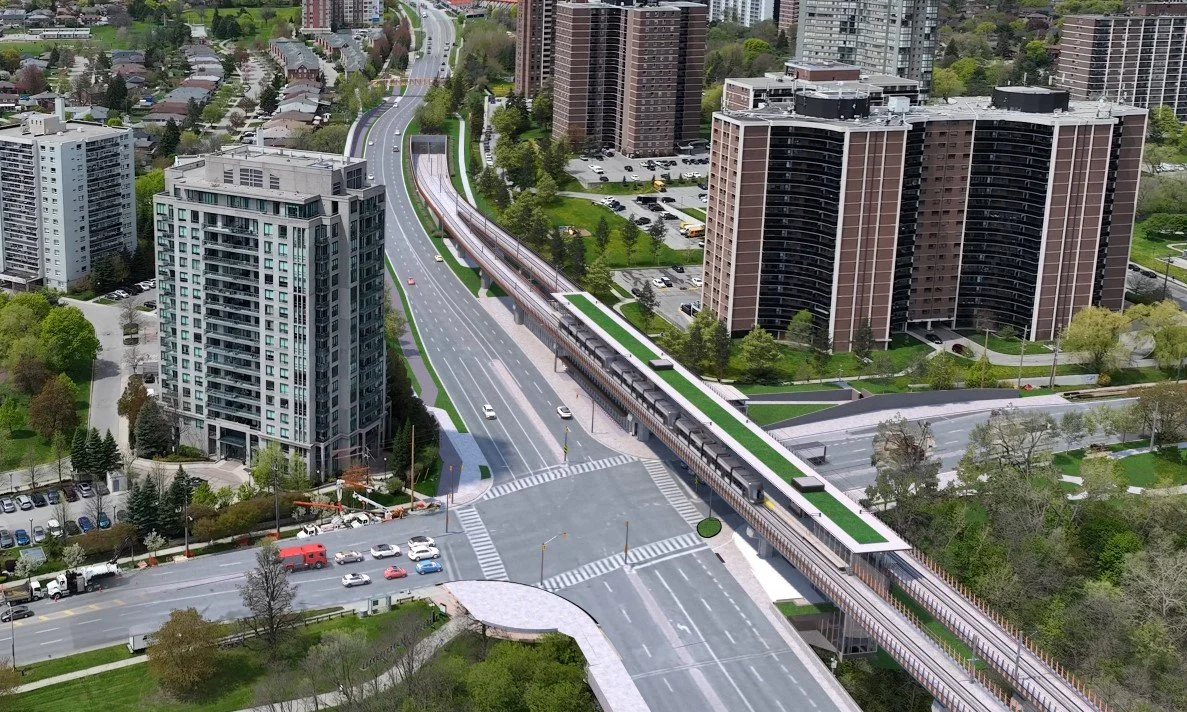
If the Crosstown is the artery that finally opened in 2026, the Crosstown West Extension is the artery still being grown — 9.2 additional kilometres of light rail, mostly in tunnel, that will carry the line from its current western terminus at Mount Dennis all the way to Renforth Drive and a future connection with Mississauga's Square One district. The extension will add seven new stations, bridge the municipal border between Toronto and Mississauga, and, when it opens in 2031, complete what Metrolinx envisions as a single continuous rapid transit corridor from the heart of Mississauga to the heart of Scarborough more than thirty kilometres of uninterrupted light rail across the top of Toronto.
Excavation work is now underway at four of the extension's stations, according to reporting from mid-July 2026, with the federal government investing approximately $1.87 billion as part of a broader $10.4 billion federal commitment to Toronto's new major transit projects. The project is being delivered under a similar P3 model to the original Crosstown, though the lessons of that troubled delivery have, by all accounts, shaped procurement practices for the extension including a more preliminary design completion before contract award and a sharper delineation of utility relocation responsibilities.
The West Extension matters beyond its ridership numbers because it represents the first true cross-boundary rapid transit link between Toronto and Peel Region a small but symbolically important breach in the municipal silos that have historically fragmented GTA transit planning. When combined with the proposed Mississauga Bus Rapid Transit corridor and the eventual Hurontario LRT, the West Extension will give residents of Mississauga a one-seat ride into midtown Toronto, a connectivity that has been promised, in various forms, since the 1980s. The current $4.7 billion estimate has held relatively steady, a rarity among the four priority subway projects, and the 2031 opening target is treated by Metrolinx as 'before 2031' though, as the original Crosstown taught everyone, the word 'before' in transit planning carries an elastic meaning.
| Vital Statistics | Details |
|---|---|
| Estimated Cost | CA$4.7 billion |
| Length | 9.2 km (mostly tunnelled) |
| Stations | 7 new, including Renforth terminus |
| Federal Contribution | ~$1.87 billion |
| Status (mid-2026) | Excavation underway at 4 stations |
| Target Opening | 2031 |
| Connection | Future link to Mississauga Square One BRT |
9. Ontario's Accelerated High-Speed Internet Program The Invisible Web
$4 Billion | 270+ Projects | 539,000+ Premises | Completion: End of 2025/2026
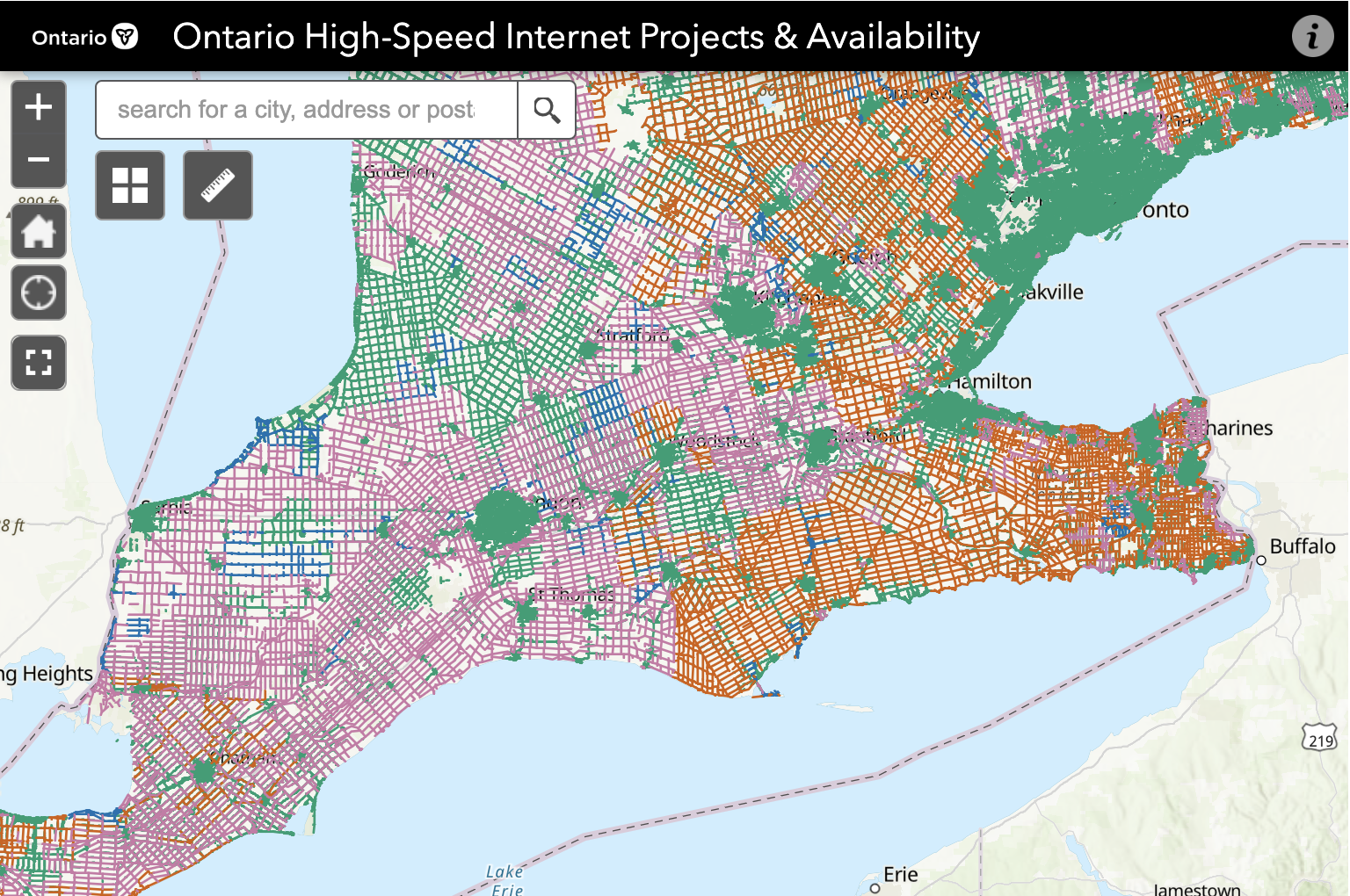
Not every mega project announces itself with tower cranes and tunnel boring machines. Some are invisible strands of glass fibre thinner than a human hair, buried along rural road allowances and strung through the canopy of boreal forest, threading connectivity into the parts of Ontario that the twentieth century left behind. The Accelerated High-Speed Internet Program is the largest single investment in broadband by any provincial government in Canadian history: nearly four billion dollars committed to connecting every community in Ontario to reliable high-speed internet defined as speeds of at least 50/10 Mbps by the end of 2025, a deadline that, as of mid-2026, has been substantially met though not yet fully closed.
As of June 2024, the province had finalized agreements worth more than $2.4 billion for over 270 high-speed internet and cellular projects, enabling access for more than 539,000 homes and businesses across the province. By October 2025, the project completion rate for broadband projects outside Northern Ontario had reached 52.5 per cent, with the remainder either under construction or in final commissioning. A 2026 Broadband Report, published by the Ontario Broadband Resource Hub, documents the latest progress; the remaining gaps cluster in the province's far north, where the cost-per-premise of fibre deployment can exceed fifty thousand dollars and where satellite and fixed wireless technologies are being pressed into service as alternatives.
What makes broadband a 'mega project' in the same conversation as subways and nuclear reactors is not its individual construction sites but its systemic ambition. The program is, in effect, the largest single piece of digital infrastructure ever undertaken in the province, and its consequences for rural economic development, telemedicine, remote education, and the simple dignity of being able to participate in twenty-first century life from a farmhouse outside Thunder Bay are as profound as any train line. Smaller sub-initiatives, like SWIFT 2.0, an $87.3 million broadband program funded jointly with local municipalities, illustrate the layered partnership model by which the province is reaching the last mile. The invisible web is, in its quiet way, as transformative as the underground leviathan.
| Vital Statistics | Details |
|---|---|
| Total Commitment | CA$4 billion (largest in Canadian provincial history) |
| Agreements Signed | 270+ projects, $2.4B+ finalized by June 2024 |
| Premises Targeted | 539,000+ homes and businesses |
| Speed Standard | Minimum 50/10 Mbps download/upload |
| Completion Rate (Oct 2025) | 52.5% outside Northern Ontario |
| Delivery Model | Province + municipal partnerships + private ISPs |
| Sub-Programs | SWIFT 2.0 ($87.3M) and others |
10. South Niagara Hospital: The Healing Citadel in the Vineyards
$3.6 Billion | 1.3 Million sq ft | 469 Beds | Opening: Summer 2028
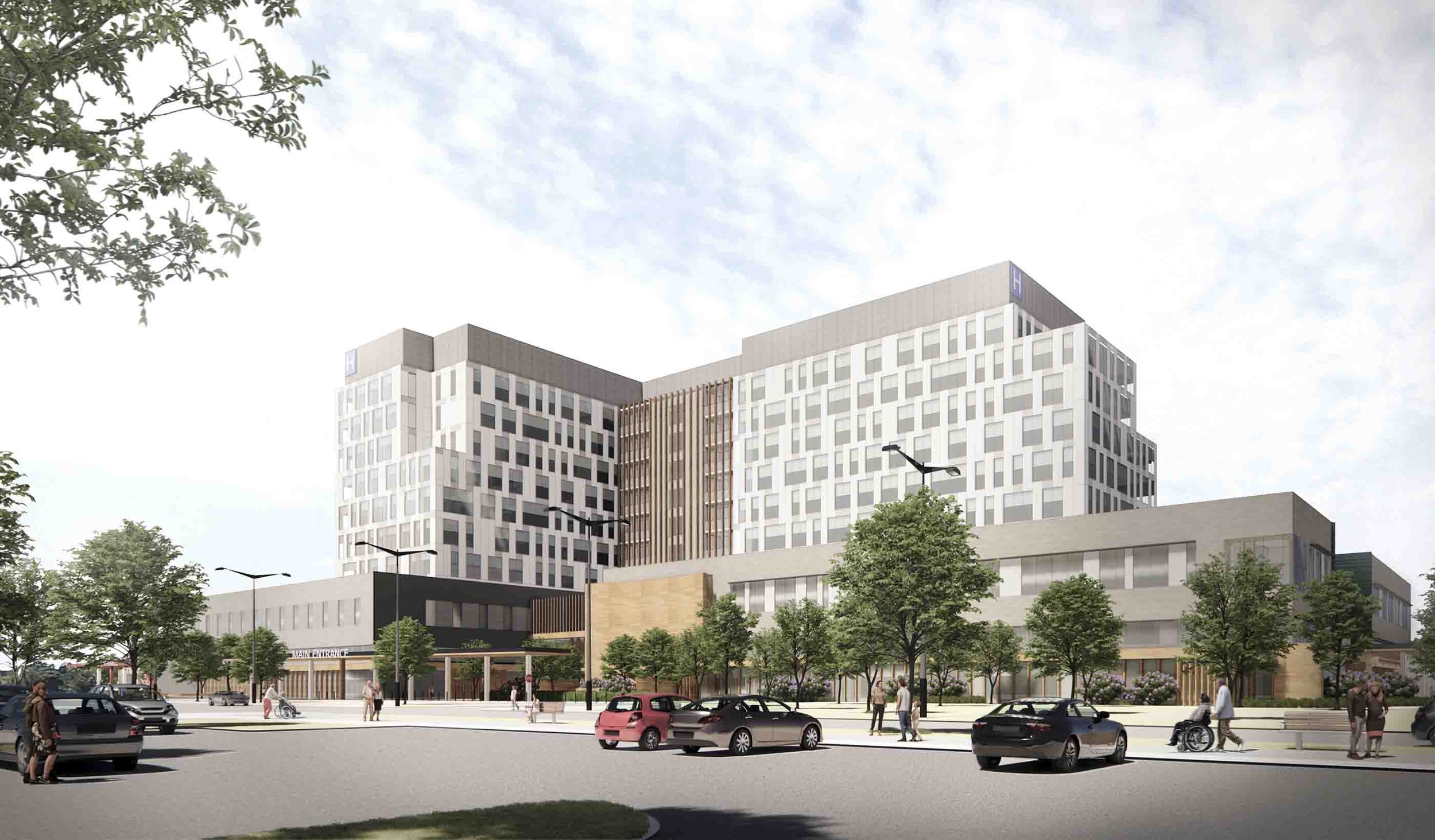
We close where we began, with cranes but this time in a Niagara vineyard. The South Niagara Hospital, rising on a greenfield site in Niagara Falls, is the largest single hospital project ever undertaken in the Niagara region and one of the largest in Ontario. At three point six billion dollars in contract value, the 1.3-million-square-foot facility will house 469 beds, new centres of excellence focused on stroke treatment, kidney care, mental health, addictions, and wellness in aging, and in a nod to the future autonomous robots delivering medications and a rooftop terrace designed for age-friendly recovery. Construction broke ground in 2023, the final structural beam was raised in February 2026, and the project reached the fifty per cent completion mark in mid-2026, on track for a summer 2028 opening.
The hospital is being delivered as a Progressive P3 Design, Build, Finance, Maintain under a contract structure that, like the Ottawa Civic Campus redevelopment profiled in passing above, favours collaborative development of project requirements and pricing over the fixed-scope DBFM model that produced the Crosstown's troubled delivery. The choice reflects an industry-wide evolution in how Infrastructure Ontario approaches the largest hospital projects, with early contractor involvement intended to surface constructability issues before they metastasize into cost overruns. Niagara Health, the operating authority, has emphasized the facility's design for wellness: natural light, outdoor therapeutic spaces, age-friendly inpatient rooms, and the operational integration of outpatient and community services.
South Niagara Hospital matters as a regional story because the Niagara peninsula is one of the fastest-aging demographics in Canada, with healthcare demand projected to grow substantially over the next two decades. It also matters as a provincial story because it exemplifies the broader pattern of hospital redevelopment that runs alongside the transit and energy mega projects a quieter, less photogenic wave of capital works that includes the $3 billion Ottawa Hospital Civic Campus redevelopment, the $1–2 billion North York General Hospital tower, the $1.2 billion West Park Healthcare Centre (substantially completed in November 2024), and dozens of smaller community hospital projects funded through the Health Infrastructure Renewal Fund. Together these projects represent tens of billions of dollars of capital reinvestment in the physical fabric of Ontario's healthcare system investments whose payoffs will be measured not in ridership numbers or megawatt hours but in the harder-to-quantify currency of lives lived and lost.
| Vital Statistics | Details |
|---|---|
| Contract Value | CA$3.6 billion (P3 DBFM) |
| Size | 1.3 million square feet |
| Beds | 469 |
| Centres of Excellence | Stroke, kidney, mental health, addictions, aging |
| Construction Start | Groundbreaking 2023; contract awarded Feb 2023 |
| Final Beam Raised | February 2026 (50% complete milestone) |
| Opening | Summer 2028 |
Honourable Mentions: The Projects Just Off the Podium
No list of ten can capture the full sweep of Ontario's 2026 construction frenzy, and the reader should know which projects narrowly missed the cut. The Ottawa Hospital Civic Campus redevelopment, a new 50-acre teaching hospital campus near Dow's Lake, is in active construction with an estimated cost of roughly $3 billion and rising. The Toronto Pearson LIFT program the largest airport infrastructure program in Canadian history broke ground in spring 2026 with a $3 billion first phase and a decade-long, multi-billion dollar total scope, designed to ready Pearson for sixty-five million passengers a year. The Ontario Place redevelopment, anchored by a Therme Canada spa and waterpark under a 95-year lease, began construction in the second quarter of 2026 with an estimated cost in excess of $1.8 billion and rising. The North York General Hospital patient care tower, valued at $1–2 billion, advanced into active procurement in June 2026. And the Pickering Nuclear Generating Station refurbishment, profiled briefly in industry media, represents the next major nuclear commitment on the horizon. Each of these would, in a less crowded year, command its own chapter.
Chapter II: The Honest Critics: Costs, Consequences, and Caveats
No chronicle of mega projects worth its salt can end with the projects themselves. The literature on mega projects from Bent Flyvbjerg's influential studies of systematic cost underestimation to the more recent work of the Oxford Said Business School on 'survival of the unfittest' is unanimous on one point: the projects that get built are rarely the projects that were promised, and the gap between promise and delivery is where the most interesting, and most troubling, questions live. Ontario's class of 2026 is no exception, and the honest researcher must address the counterarguments head on.
The Pattern of Cost Escalation
The most damning pattern, statistically, is the consistency with which these projects have blown past their original budgets. The Ontario Line has tripled, from $10.9 billion to $34 billion, in seven years. The Scarborough Subway Extension has nearly doubled. The Eglinton Crosstown arrived six years late and a billion dollars over. These are not, isolated anecdotes; they are the empirical signature of what Flyvbjerg calls 'optimism bias' and 'strategic misrepresentation' twin pathologies by which project proponents, whether from genuine belief or calculated salesmanship, systematically underestimate costs and overestimate benefits at the approval stage. Ontario's Auditor General has, in successive annual reports, documented the pattern in specific detail. The Financial Accountability Officer has been petitioned, as of June 2026, to investigate the true cost of Highway 413 precisely because the government's own estimates have been treated with scepticism.
Environmental and Social Externalities
The environmental critiques are no less substantial. Highway 413, by the analysis of Environmental Defence, will pave over protected Greenbelt land and prime farmland, fuel sprawl, and through induced demand ultimately worsen the very congestion it is meant to relieve. The exemption of the project from the provincial Environmental Assessment Act via Bill 212 in 2024 is itself, critics argue, an admission that the project could not withstand rigorous scrutiny. The Ontario Place redevelopment has been the subject of a 117-page analysis by the Auditor General, raising questions about procurement, privatization of public space, and the closure of the Ontario Science Centre. The Ring of Fire mining development in Northern Ontario, though not profiled in the top ten, continues to draw regional assessment warnings from First Nations about insufficient environmental data. Each of these projects, in its own way, illustrates the tension between speed of delivery and rigour of stewardship.
Delivery Model and Governance Concerns
The P3 delivery model that has anchored much of Ontario's infrastructure program Design-Build-Finance-Maintain, and its more recent Progressive P3 variant has its own chorus of critics. The Eglinton Crosstown's troubled delivery, marked by litigation between Metrolinx and the Crosslinx consortium, has been cited as evidence that the model transfers risk in theory but absorbs it in practice, with the public ultimately bearing both cost overruns and schedule delays. Calls for a public inquiry into the Crosstown, rejected by Premier Ford, have been echoed by transit advocacy groups, the provincial NDP, and academic observers. The Progressive P3 model now being used for hospital projects like South Niagara and the Ottawa Civic Campus represents, in part, a response to these criticisms with earlier contractor involvement and more collaborative risk-sharing but its track record is still comparatively short.
Limitations of This Chronicle
It is also important to acknowledge the limitations of any such compilation. The cost figures cited here are drawn from the most recent publicly available sources provincial government releases, Metrolinx and Infrastructure Ontario project pages, peer-reviewed reporting from CBC, Global News, the Daily Commercial News, and ReNew Canada but they are inherently snapshots of a moving target. Several projects (Highway 413, the Ottawa Civic Campus) have official cost estimates that are either not yet fixed or are widely expected to rise. The ranking by cost is therefore approximate, particularly for projects whose estimates are stated as ranges. The decision to include recently completed projects like the Darlington Refurbishment and the Eglinton Crosstown, alongside still-under-construction projects, reflects the user's interest in 'current ongoing mega projects in 2026' both projects had major 2026 milestones and remain, in operational terms, very much in their first year of service. Finally, the focus on cost as the ranking criterion means that smaller but highly consequential projects the Ring of Fire, the Ottawa Civic Campus, Pearson LIFT appear only as honourable mentions; a ranking by social impact, or by innovation, would produce a different list.
Chapter IV: What Ontario Is Becoming
Stand again, at the end of this chronicle, on that Bloor Street Viaduct. Libby is still grinding, somewhere in the dark beneath your feet. To the east, the cranes of the Scarborough extension move in their slow mechanical ballet. To the west, the Crosstown's Flexity Freedom trains hum along a corridor that, for a decade, was a trench of cones and concrete barriers. Farther west still, in Mississauga, excavation has begun on the extension that will, by 2031, push the line all the way to Square One. North of the city, in York Region, the Yonge North extension is digging its launch shaft. Three hours west, on the shore of Lake Huron, Unit 3 of the Bruce station is humming at full power, the first of six to be reborn. East of the city, in Clarington, the four reactors of Darlington have all returned to service, the world's largest refurbishment quietly complete. In Niagara Falls, the final beam of a new hospital has been signed by the workers who built it. In Ottawa, a new campus is rising on Carling Avenue. In farmhouses across rural Ontario, fibre is being lit.
What is Ontario becoming, in this fever of construction? The honest answer is: a province that has decided, with rare single-mindedness, to bet on its own growth. The two hundred billion dollar capital plan, the seventy billion dollar transit expansion, the nuclear renaissance, the broadband push each is a wager that the next generation of Ontarians will be more numerous, more urban, more connected, more electric, and more demanding of the public realm than the last. Each is also a wager that the province's project delivery machinery, for all its documented flaws, is competent enough to translate dollars into steel and concrete and gigawatts. Both wagers may yet fail. The cost overruns are real. The environmental critiques are real. The political opposition is real. History is full of mega projects that delivered less than they promised, and Ontario's class of 2026 will not be exempt from that history.
And yet the projects are being built. The trains will run. The reactors will hum. The fibre will light. The patients will be treated in the new towers of Niagara and Ottawa and North York. The cranes that today crowd the skyline of Toronto, and the smaller cranes that punctuate the skylines of Hamilton and Ottawa and Sudbury, are not monuments to ambition alone. They are the visible evidence of a society that has chosen, for all the imperfection of its choices, to invest in its own future rather than to consume its present. That choice, however expensive, however contested, however flawed in execution, is the choice that distinguishes a province that believes it has a future from one that has stopped believing. Ontario, in 2026, has not stopped believing. The cathedrals are rising. Whether they will be inhabited by saints or by sinners is, as always, a question for the next generation to answer.
We have to build. Premier Doug Ford, June 2025
The researcher closes this chronicle with a final, more modest observation. The story of Ontario's mega projects is not, in the end, a story about engineering or about politics or even about money, though it is all of those things. It is a story about time about the strange temporal asymmetry by which a tunnel boring machine named Libby, working in the dark for years on end, can produce a thing that will outlive everyone who voted to fund her. The Ontario Line, when it opens, will carry children not yet born. The Bruce reactors, when their second lives end in 2064, will power the homes of people who are today, themselves, children. The South Niagara Hospital will heal patients whose grandparents broke ground for it. That is the strange, slow, generational magic of mega projects: they are the rare instruments by which a society can reach forward in time and leave a gift for someone it will never meet. Ontario, in 2026, is reaching forward. The reader of this dossier, however sceptical, is invited to watch with care and, where
References
All figures, dates, and quotations in this chronicle are drawn from the publicly available sources listed below, accessed and verified between June and August 2026. Sources are grouped by project for ease of reference. Web sources were accessed in August 2026; URLs are clickable where the source is available online.
Ontario Line [1] Wikipedia contributors. "Ontario Line." Wikipedia, The Free Encyclopedia. Accessed August 2026. Estimated cost CA$34 billion, completion 2032; tunnelling began April 20, 2026. https://en.wikipedia.org/wiki/Ontario_Line[2] Metrolinx. "Ontario Line — Projects & Programs." Official project page. Accessed August 2026. https://www.metrolinx.com/en/projects-and-programs/ontario-line[3] Spencer, M. "Ontario Line cost jumps to $34B, more than triple amount initially projected." CBC News, August 11, 2026. https://www.cbc.ca/news/canada/toronto/ontario-line-cost-triples-projection-9.7303077[4] CBC News. "Ontario Line likely won't open until early 2030s: Metrolinx." February 18, 2026. https://www.cbc.ca/news/canada/toronto/ont-subway-9.7096746[5] Government of Canada. "Federal government highlights progress on Ontario Line subway." April 16, 2026. Tunnelling milestone. https://www.canada.ca/en/housing-infrastructure-communities/news/2026/04/federal-government-highlights-progress-on-ontario-line-subway.htmlHighway 413[6] Marcolongo, M. (Environmental Defence), quoted in The Pointer. "Coalition calls on Ontario's financial watchdog to probe true cost of Highway 413." June 6, 2026. https://thepointer.com/article/2026-06-06/coalition-calls-on-ontario-s-financial-watchdog-to-probe-true-cost-of-financially-reckless-highway-413-ford-shuts-legislature-down-for-5-months[7] Government of Ontario. "Highway 413." Official project site. Accessed August 2026. https://www.highway413.ca[8] Wikipedia contributors. "Ontario Highway 413." Wikipedia. Accessed August 2026. https://en.wikipedia.org/wiki/Ontario_Highway_413Bruce Power Major Component Replacement[9] Government of Ontario. "Ontario Delivers Record-Setting Nuclear Refurbishment at Bruce Ahead of Schedule and Under Budget." News release, June 8, 2026. https://news.ontario.ca/en/release/1007558/ontario-delivers-record-setting-nuclear-refurbishment-at-bruce-ahead-of-schedule-and-under-budget[10] Bruce Power. "Life-Extension Program & MCR Project." Official project page. Accessed August 2026. https://www.brucepower.com/life-extension-program-mcr-project[11] Cameco. "CFM awarded $62 million in contracts for Bruce Power Major Component Replacement project." April 23, 2018. Total program cost ~CA$13 billion. https://www.cameco.com/media/news/cfm-awarded-62-million-in-contracts-for-bruce-power-major-component-replacement-project[12] National Observer. "Ontario completes major nuclear project ahead of schedule." June 9, 2026. https://www.nationalobserver.com/2026/06/09/news/ontario-bruce-power-refurbishmentDarlington Refurbishment[13] Ontario Power Generation. "Darlington Refurbishment Project." Official project page. Accessed August 2026. Project completed February 2026, $150M under budget. https://www.opg.com/projects-services/projects/nuclear/darlington-refurbishment[14] Government of Ontario. "Ontario Delivers Darlington Refurbishment Project Ahead of Schedule and Under Budget." News release, February 2, 2026. https://news.ontario.ca/en/release/1006993/ontario-delivers-darlington-refurbishment-project-ahead-of-schedule-and-under-budget[15] Ontario Energy Board. "Darlington Refurbishment Program Annual Report." December 18, 2024. Total program cost $12.8 billion. https://www.oeb.ca/sites/default/files/OPG_OEB_DRP%20Annual%20Reporting_2024.pdfEglinton Crosstown LRT (Line 5)[16] Government of Ontario. "Ontario Marks Opening of the Eglinton Crosstown LRT." News release, February 6, 2026. Service began February 8, 2026. https://news.ontario.ca/en/release/1007010/ontario-marks-opening-of-the-eglinton-crosstown-lrt[17] Transport Action Ontario. "Lessons Learned from Eglinton Crosstown LRT Project." Accessed August 2026. $13 billion DBFM, $1B over budget, 6 years late. https://ontario.transportaction.ca/lessons-learned-from-eglinton-crosstown-lrt-project[18] Wikipedia contributors. "Line 5 Eglinton." Wikipedia. Accessed August 2026. https://en.wikipedia.org/wiki/Line_5_EglintonScarborough Subway Extension[19] CBC News. "'We have to build,' Ford says, as cost of Scarborough subway extension nears $10.2B." June 25, 2025. https://www.cbc.ca/news/canada/toronto/scarborough-subway-extension-metrolinx-cost-1.7570254[20] Metrolinx. "Scarborough Subway Extension — Projects & Programs." Official page. Accessed August 2026. https://www.metrolinx.com/en/projects-and-programs/scarborough-subway-extension[21] Infrastructure Ontario. "Scarborough Subway Extension — Stations, Rail and Systems." Project page. Accessed August 2026. https://www.infrastructureontario.ca/en/what-we-do/projectssearch/scarborough-subway-extension--stations-rail-and-systems[22] Government of Canada. "Canada and Ontario mark another milestone for the Scarborough Subway Extension." July 31, 2026. https://www.canada.ca/en/housing-infrastructure-communities/news/2026/07/canada-and-ontario-mark-another-milestone-for-the-scarborough-subway-extension.htmlYonge North Subway Extension[23] Government of Ontario. "Major Construction Underway for Yonge North Subway Extension." News release, July 23, 2026. Federal contribution $2.24B. https://news.ontario.ca/en/release/1007794/major-construction-underway-for-yonge-north-subway-extension[24] Munro, S. "Tracking Metrolinx Project Costs." Steve Munro.ca, February 19, 2026. Yonge North estimated at $5.6 billion. https://stevemunro.ca/2026/02/19/tracking-metrolinx-project-costs-2[25] Metrolinx. "Yonge North Subway Extension — FAQs." Official page. Accessed August 2026. https://www.metrolinx.com/en/projects-and-programs/yonge-north-subway-extension/faqs[26] Wikipedia contributors. "Yonge North subway extension." Wikipedia. Accessed August 2026. https://en.wikipedia.org/wiki/Yonge_North_subway_extensionEglinton Crosstown West Extension[27] Metrolinx. "Eglinton Crosstown West Extension — Projects & Programs." Official page. Accessed August 2026. 9.2 km, 7 stations, opening 2031. https://www.metrolinx.com/en/projects-and-programs/eglinton-crosstown-west-extension[28] Government of Canada / Yahoo Finance. "Federal government highlights progress on Eglinton Crosstown West Extension." July 10, 2026. Federal investment ~$1.87B. https://finance.yahoo.com/economy/policy/articles/federal-government-highlights-progress-eglinton-164500025.html[29] ConstructConnect. "Excavation work underway on four Eglinton Crosstown West Extension stations." July 15, 2026. http://canada.constructconnect.com/dcn/news/infrastructure/2026/07/excavation-work-underway-on-four-eglinton-crosstown-west-extension-stationsOntario Broadband Initiative[30] Government of Ontario. "Expanding high-speed internet access in Northern Ontario." News release, June 24, 2024. $4B provincial commitment; 270+ projects; 539,000+ premises. https://news.ontario.ca/en/release/1004753/expanding-high-speed-internet-access-in-northern-ontario[31] Infrastructure Ontario. "Accelerated High-Speed Internet Program." Project page. Accessed August 2026. https://www.infrastructureontario.ca/en/what-we-do/projectssearch/accelerated-high-speed-internet-program[32] Ontario Broadband Resource Hub. "Reports and Resources." 2026 Broadband Report; 52.5% project completion outside Northern Ontario as of October 2025. https://hub.ontariobroadbandresourcehub.ca/pages/reports-and-resourcesSouth Niagara Hospital[33] Infrastructure Ontario. "South Niagara Hospital." Project page. Contract value $3.6 billion. Accessed August 2026. https://www.infrastructureontario.ca/en/what-we-do/projectssearch/south-niagara-hospital[34] Niagara Health. "About the South Niagara Hospital." Key timelines: groundbreaking 2023; final beam February 2026; opening Summer 2028. https://www.niagarahealth.on.ca/site/south-niagara-about[35] CBC News. "Autonomous robots, roof-top terraces and age-friendly design inside the new South Niagara Hospital." July 20, 2026. https://www.cbc.ca/news/canada/hamilton/new-hospital-state-of-the-art-billions-of-dollars-construction-niagara-9.7274542Background and General Sources[36] HKC Construction. "The 2026 Horizon: 10 Mega Projects That Are Changing Ontario Forever." March 12, 2026. Reference to $200 billion 10-year capital plan. https://www.hkcconstruction.com/blogs/top-10-ontario-mega-construction-projects-2026[37] ReNew Canada. "Top100 Infrastructure Projects." Annual report ranking Canada's largest public infrastructure projects. Accessed August 2026. https://www.renewcanada.net/top100-infrastructure-projects[38] Infrastructure Ontario. "Capital Delivery — Major Projects." Accessed August 2026. https://www.infrastructureontario.ca/en/what-we-do/capital-delivery[39] Natural Resources Canada. "Major Energy and Natural Resources Projects Inventory." Updated April 20, 2026. https://natural-resources.canada.ca/science-data/data-analysis/major-energy-natural-resources-projects-inventory [40] ConstructConnect / Daily Commercial News. "IO's June Market Update shows $25B in construction value for 24 projects." June 22, 2026. http://canada.constructconnect.com/dcn/news/infrastructure/2026/06/ios-june-market-update-shows-25b-in-construction-value-for-24-projects