









Updated November 4, 2026. Results are projections, and some races are still being counted.
Americans voted on November 3, and Canadians are paying close attention. Democrats are projected to win control of both the House of Representatives and the Senate, and they won several governor races. President Donald Trump, a Republican, stays in the White House until January 2029.
So the United States is heading into a period of divided government. For Canadians, the important question is what changes for our exports, jobs, prices and businesses. This guide explains what the 2026 US midterm election results mean for Canada, sector by sector. It sticks to the practical impact and doesn't take a political side.
KEY TAKEAWAYS
Tariffs won't disappear overnight. The new Congress takes office in early January 2027. A bill to remove tariffs can still be vetoed by the President, and overriding a veto takes a two-thirds vote in both chambers.
Trade talks matter more than ever. Canada and the US are still negotiating, and CUSMA remains in force under annual reviews.
Expect more oversight, but not a reset. A Democratic Congress can hold hearings, demand information and move trade bills. Over time, those tools can influence US trade policy.
Markets moved quickly. The Canadian dollar rose to a seven-week high the morning after the vote, mostly because the US dollar weakened.
Some industries are more exposed than others. Steel, aluminum, autos, lumber and construction feel trade decisions most directly. The outlook for energy and agriculture depends on how talks unfold.
THE 2026 US MIDTERM ELECTION RESULTS AT A GLANCE
White House: Republican. President Trump's term runs to January 2029.
Senate: Democratic majority (projected). A small number of races are still being counted.
House of Representatives: Democratic majority (projected). Some seats are still to be called.
Governors: Democrats were projected winners in several races, including Georgia, Ohio, Iowa and Texas.
When the new Congress starts: Early January 2027. Until then, the current Congress stays in place for a "lame-duck" session.
Final seat counts in close races can take days or weeks. Check back as results are certified.
WHAT DIVIDED GOVERNMENT MEANS FOR CANADA-US TRADE
WHO CONTROLS TARIFFS IN THE US?
The US Constitution gives Congress the power to set tariffs. Over the decades, though, Congress passed laws that let the President impose tariffs for specific reasons, such as national security (Section 232) or unfair trade practices (Sections 301 and 338). Most US tariffs on Canadian goods today rely on those laws.
In February 2026, the US Supreme Court ruled that the International Emergency Economic Powers Act (IEEPA) does not authorize tariffs. That struck down one set of tariffs. Since then, the administration has relied on other laws, including Section 338 of the Tariff Act of 1930, to apply 50% tariffs to a list of Canadian goods.
CAN A DEMOCRATIC CONGRESS REMOVE TARIFFS ON CANADA?
It can try. Congress can pass a bill that cancels tariffs or limits the President's tariff powers. The President can veto that bill, though, and overriding a veto requires a two-thirds vote in both the House and the Senate. Neither party is projected to hold that many seats, so an override would need support from both sides.
Economists and trade experts have made the same point since the results came in. Stephen Brown of Capital Economics said the near-term policy outlook hasn't changed much, because Democrats don't hold a filibuster-proof Senate majority.
WHAT A NEW CONGRESS CAN CHANGE
Oversight: hearings on how tariffs affect US prices, jobs and supply chains.
Legislation: bills that would require congressional approval for new tariffs or narrow existing tariff powers.
Budget leverage: spending and funding negotiations that give Congress bargaining power with the White House.
Regional pressure: trade with Canada was a campaign issue in states with close ties to Canada, including Michigan, Maine, Ohio and Kansas.
In short, expect more debate and scrutiny of trade policy. Don't expect an automatic reset.
SUPPORT FOR TARIFFS EXISTS IN BOTH PARTIES
Support for tariffs and "Buy American" rules isn't limited to one party. When CUSMA was ratified in 2020, eight of the ten Senate votes against it came from Democrats. Members of both parties have also pressed Canada on access to its dairy market. A change in who controls Congress doesn't automatically change US trade priorities.
WHAT HAPPENS TO CUSMA (USMCA)?
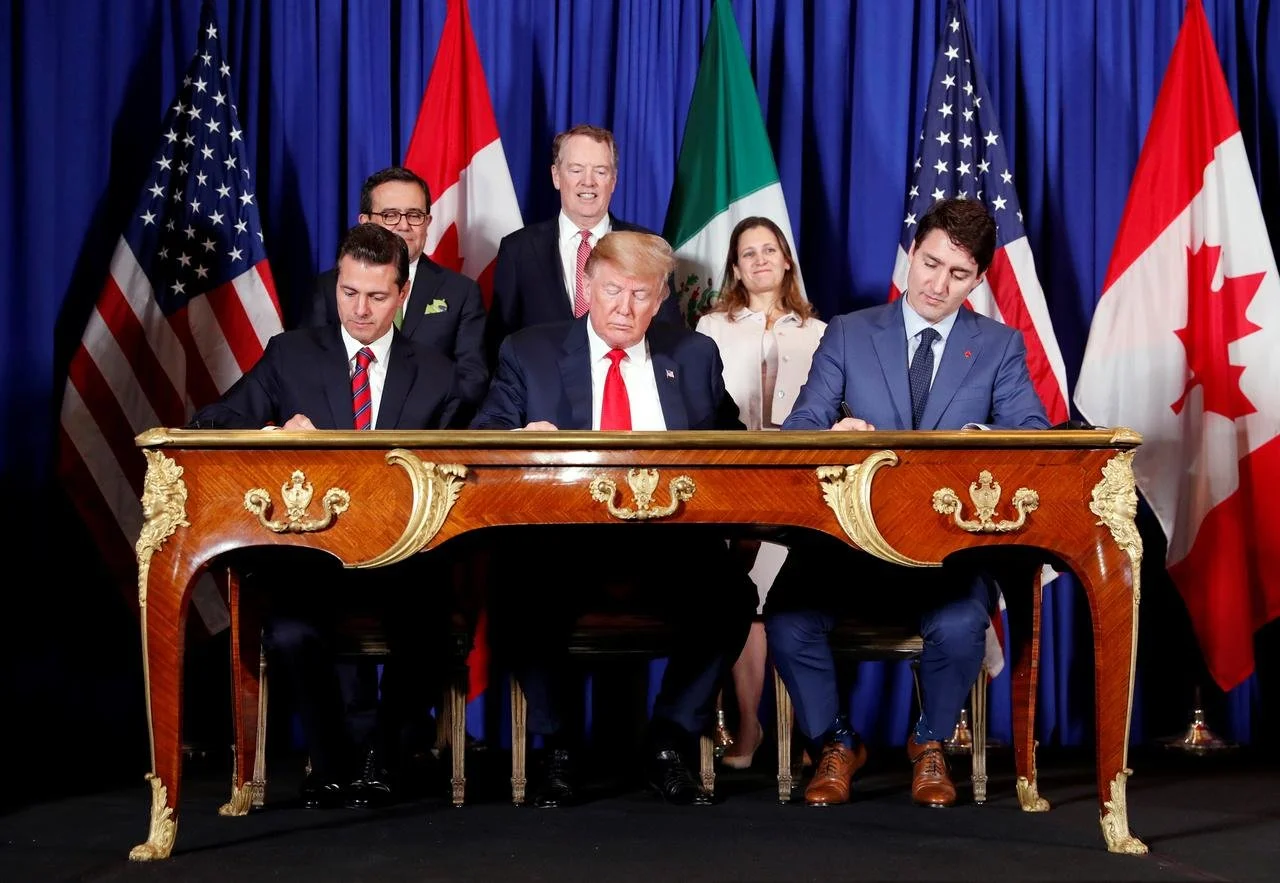
CUSMA, called USMCA in the US, is still in force. At the July 2026 joint review, the US did not agree to extend the agreement, which moved it into annual reviews. If the three countries don't agree on an extension, the agreement could expire in 2036.
Christopher Sands, director of the Center for Canadian Studies at Johns Hopkins University, has said there is room to negotiate as long as the US doesn't withdraw. Congress has a role in trade agreements, so the new majority could shape the next review. The President still leads the negotiations.
For businesses, CUSMA origin rules still matter. Goods that qualify under CUSMA often face lower US tariffs than goods that don't, especially in the auto sector.
WHAT THE MIDTERMS MEAN FOR CANADIAN INDUSTRIES
MANUFACTURING
Canadian manufacturers, especially in Ontario and Quebec, sell heavily into the US and are closely tied to American supply chains. The midterm results don't change tariff rates by themselves. They do bring new voices to Washington from manufacturing states such as Michigan and Ohio, where tariffs were a major campaign topic.
Aerospace is one example. In Kansas, about 1,500 jobs are tied directly to Canadian aerospace company Bombardier, and the US rescinded tariffs affecting Bombardier shortly before the election. What to watch: product-by-product tariff relief, which has already happened for some goods.
CONSTRUCTION AND BUILDING MATERIALS
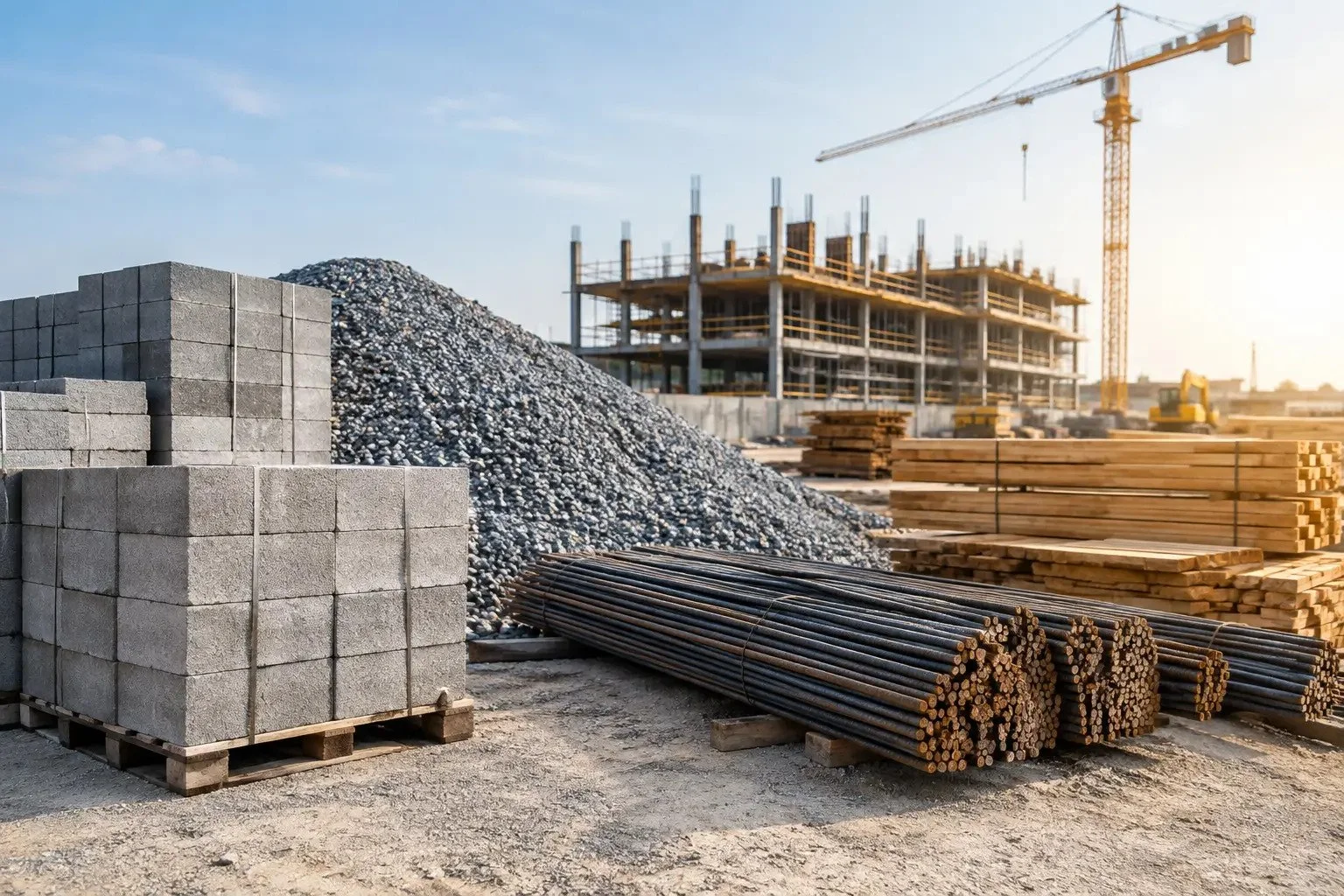
For Canada's construction industry, the biggest issue is the cost of materials. According to CMHC, between late 2024 and mid-2026 the fastest-rising construction cost categories were the ones that depend on tariff-affected inputs:
Utilities: +15%
Plumbing: +14%
HVAC: +13%
Metal fabrications: +13%
Structural steel framing: +8%
Wood and concrete costs were roughly flat over the same period. Contractors and developers should watch three things:
Steel and aluminum prices. US tariffs on Canadian metals and Canada's counter-tariffs on US metals both affect what builders pay for rebar, structural steel, fasteners and mechanical systems.
Changing product lists. The US removed tariffs on Canadian cement and road salt in September 2026 and dropped duties on more products in October. These lists can change quickly, in either direction.
Equipment. In 2026, senators from both parties asked for a Section 232 investigation into imports of heavy construction and agricultural equipment. New tariffs from that process would affect Canadian equipment makers and the contractors who buy from them.
There may also be an upside. CMHC notes that when Canadian wood products are harder to sell in the US, more of them may stay in Canada, which could help lower homebuilding costs here. CMHC connects this to the federal Build Canada agenda and to efforts to reduce trade barriers between provinces.
STEEL AND ALUMINUM
Canada has long been one of the largest suppliers of steel and aluminum to the US. Section 232 tariffs of 50% on steel and aluminum remain in place, and CUSMA doesn't exempt them. The President sets these tariffs under national security law, so the midterm results don't change them directly.
Aluminum costs were a talking point in Michigan's Senate race, though, and the new Congress may hold hearings on what these tariffs cost American buyers. At home, the federal and Ontario governments have announced nearly $8 billion in support for the steel and auto industries.
AUTOS AND AUTO PARTS
Autos are the most closely linked part of the Canada-US economy. Under current US rules, CUSMA-qualifying vehicles pay the 25% Section 232 tariff only on their non-US content, and qualifying parts are exempt. Michigan and Ohio, the heart of the US auto industry, both had closely watched Senate races, so the sector will get plenty of attention in the new Congress. Auto rules of origin are likely to come up again in future CUSMA reviews.
LUMBER AND FORESTRY
Softwood lumber is one of the longest-running trade disputes between the two countries. Canadian lumber faces US anti-dumping and countervailing duties, plus a separate 10% Section 232 tariff that started in October 2025. Those duties come out of US trade law and the Commerce Department's reviews, not direct votes in Congress, so the midterms are unlikely to change them soon. Forestry communities in BC, Quebec, Ontario and New Brunswick should follow the ongoing duty reviews, which can raise or lower rates.
ENERGY
Energy is Canada's largest export to the US. Oil prices have risen recently amid tensions in the Middle East, which has also supported the Canadian dollar. Canadian energy has generally been treated more gently than other sectors in US tariff actions, because many US refineries and consumers depend on it. Energy prices and affordability were also big issues for American voters.
Most energy policy, including pipelines, permits and clean-energy incentives, is set by the President and by individual states. Newly elected governors in border and northeastern states also matter for electricity trade with provinces such as Quebec, Ontario and Manitoba.
AGRICULTURE AND FOOD
Farm states played a big role in this election. Democrats are projected to have flipped Senate seats in Iowa and Kansas, where farmers have felt the effects of trade tensions. For Canadian agriculture, the key issues are market access, dairy and the cost of inputs and equipment. US pressure on Canada's supply-managed dairy sector has come from both parties, so it's likely to stay part of trade talks. Canada's counter-tariffs on some US food products can also affect grocery prices here.
THE CANADIAN DOLLAR, MARKETS AND INTEREST RATES
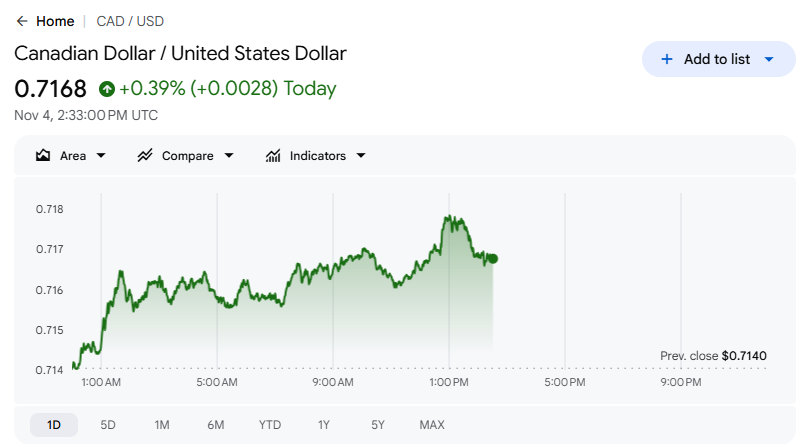
On the morning after the vote, the Canadian dollar rose about 0.5% to a seven-week high against the US dollar, at around 71.5 US cents. The main reason was a weaker US dollar. US Treasury yields fell as investors expected more gridlock in Washington, and US stock futures moved higher.
What that means for Canadians:
A stronger loonie makes US goods, travel and imported equipment a little cheaper, and makes Canadian exports a little less competitive.
The Bank of Canada sets interest rates based on Canadian inflation and growth. US politics can influence those decisions indirectly through trade, the dollar and oil prices.
One day of trading isn't a trend. Currencies and markets can move again as final results and policy signals come in.
WHAT IT MEANS FOR CANADIAN HOUSEHOLDS
Prices: Tariffs and counter-tariffs affect the cost of some goods, and any changes will take time to reach store shelves.
Jobs: Workers in export-heavy industries such as autos, steel, aluminum, forestry and manufacturing are most affected by trade decisions.
Housing: Building costs depend on materials, labour and interest rates. Trade mostly affects the materials piece.
Travel: The exchange rate affects the cost of cross-border trips and shopping.
Many Canadians expect a long road. In a pre-election Abacus Data survey (October 16 to 21, 2026), 44% said a Democratic Congress would improve the economic relationship and 34% expected no change. 64% said Canada should plan as though the relationship has changed for good.
WHAT CANADIAN BUSINESSES CAN DO NOW
Map your US exposure. List the customers, suppliers and products that cross the border.
Check CUSMA eligibility. Make sure your origin paperwork is in order. Qualifying goods often get lower rates.
Build cost escalation into contracts. This matters most for steel, aluminum, copper and equipment.
Diversify suppliers and markets. Look at Canadian, US and other international options.
Ask about tariff relief. The federal government has offered remission (tariff relief) on some imported inputs. Check whether your goods qualify.
Manage currency risk. If you buy or sell in US dollars, talk to your bank about hedging.
Follow the calendar. The key dates are below.
KEY DATES TO WATCH
November to December 2026: final race calls and the current Congress's lame-duck session.
Early January 2027: the new Congress is sworn in.
Ongoing: Canada-US trade negotiations and possible court challenges to the Section 338 tariffs.
Mid-2027: the next annual CUSMA joint review.
November 2028: the next US presidential election.
FREQUENTLY ASKED QUESTIONS
WILL THE US MIDTERM RESULTS END TARIFFS ON CANADA?
Not right away. The new Congress starts in January 2027, and any bill to remove tariffs can be vetoed by the President. Overriding a veto takes a two-thirds vote in both chambers. Changes are more likely to come gradually, through trade talks, court rulings and congressional pressure.
WHEN DOES THE NEW US CONGRESS TAKE OFFICE?
Early January 2027. Until then, the current Congress continues to sit.
IS CUSMA STILL IN EFFECT?
Yes. CUSMA (USMCA) is still in force. Because the US didn't confirm an extension at the July 2026 review, the agreement is now reviewed every year and could expire in 2036 without an agreed extension.
HOW DID THE CANADIAN DOLLAR REACT TO THE MIDTERM RESULTS?
The loonie rose about 0.5% to a seven-week high the morning after the vote, mostly because the US dollar weakened as markets priced in divided government.
WHAT DO THE MIDTERMS MEAN FOR CANADIAN CONSTRUCTION?
In the short term, not much changes. Material costs, especially steel, aluminum and mechanical systems, still depend on tariffs and counter-tariffs. Watch for product-by-product tariff changes, a possible US investigation into construction equipment imports, and more Canadian lumber staying in the domestic market.
DOES A DEMOCRATIC CONGRESS MEAN BETTER RELATIONS WITH CANADA?
Not necessarily. Some members of both parties support tariffs, and trade policy is still led by the White House. A new Congress may bring more scrutiny of tariffs, but the overall relationship will depend on negotiations between Ottawa and Washington.
THE BOTTOM LINE FOR CANADA
The 2026 US midterms shift power in Washington, but they don't rewrite the rules overnight. The White House still leads on tariffs, CUSMA and trade talks, while Congress gains a louder voice through oversight, legislation and the budget. For Canadian businesses, the best approach is the same as before the vote: know your exposure, keep your costs flexible and watch the key dates.
Planning a project and wondering how trade changes could affect costs or timelines? Contact our team, and subscribe to our blog for updates as final results come in.
This article is for general information only and isn't legal, financial or tax advice. Tariff rates and election results can change, so check official sources before making business decisions.
